
Coffee-based drinks now go far past lattes, cappuccinos, and iced coffee. Café menus and cocktail bars increasingly feature drinks that use espresso in very different ways, including espresso tonic and espresso martini.
Espresso tonic gained traction through Scandinavian specialty coffee culture in the early 2010s before spreading to specialty cafés and alcohol-free cocktail menus. Espresso martini has a longer cocktail history, with London bartender Dick Bradsell commonly credited with creating it in 1983.
Both drinks start with espresso, yet almost everything else about them differs. Alcohol, sugar, calories, caffeine, texture, serving size, and flavor all affect which option may fit your preferences better.
For everyday drinking, espresso tonic generally has an advantage because its standard recipe contains no alcohol and can be relatively light. Espresso martini works better as an occasional cocktail when sweetness, spirits, and a fuller texture are part of the experience.
Key Differences Between Espresso Tonic and Espresso Martini
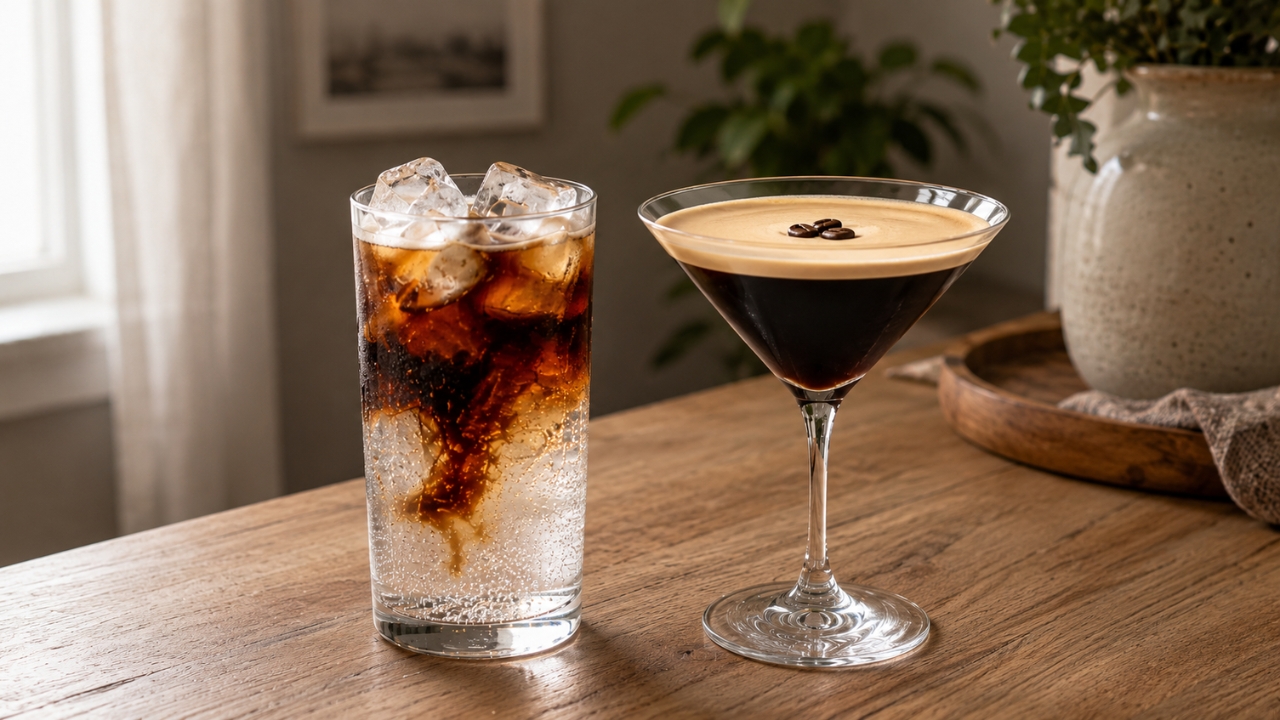
At first glance, both drinks seem closely related because espresso is the central coffee ingredient. Preparation, mixer choice, serving style, and purpose push them into very different categories once you look more closely.
Espresso tonic combines espresso with chilled tonic water, usually over ice. A typical version uses about 2 ounces of espresso and 6 ounces of tonic water, creating a long, sparkling coffee drink.
Espresso martini takes a more concentrated cocktail approach.
- 2 ounces vodka
- A double shot of espresso
- 0.5 ounce coffee liqueur
- 0.5 ounce simple syrup
Alcohol creates one of the clearest differences. Standard espresso tonic contains no alcohol, while vodka and coffee liqueur are central to a traditional espresso martini.
Sweetness also differs, although espresso tonic is not always as light as it looks. Tonic water can contain a considerable amount of sugar, while an espresso martini gets sweetness through coffee liqueur and, in many recipes, simple syrup.
Texture provides another clear contrast. Espresso tonic is crisp, fizzy, and refreshing. Espresso martini has more body, a smoother mouthfeel, and a creamy foam created by shaking espresso with the other ingredients.
Flavor moves in different directions as well. Espresso tonic combines roasted coffee bitterness with quinine bitterness in tonic water. Carbonation can make citrus, floral, and fruity coffee characteristics more noticeable.
Espresso martini focuses more heavily on roasted coffee, sweetness, alcohol, and body. Coffee liqueur can add chocolate, caramel, or roasted notes depending on the brand.
Occasion matters too. Espresso tonic fits daytime drinking, brunch, café visits, and warm weather particularly well. Espresso martini fits evenings, parties, dinners, and dessert-style occasions more naturally.
Which One Is Lower in Sugar?
Sugar is one of the less obvious parts of the comparison. Espresso contributes very little on its own, so most added sugar comes through tonic water, coffee liqueur, or syrup.
Current Dietary Guidelines for Americans recommend keeping added sugars below 10% of daily calorie intake. For a 2,000-calorie diet, that works out to less than about 50 grams per day.
Sugar in Espresso Tonic
View this post on Instagram
Espresso itself contributes very little sugar. Most sugar in an espresso tonic comes through tonic water or any syrup added during preparation.
Tonic water should not automatically be treated as a low-sugar mixer. Some varieties contain roughly 9.5% to 10% sugar by weight, placing them close to ordinary soda in sugar concentration.
Many commercial tonic waters can also provide approximately 20 to 25 grams of sugar per serving. As a result, an espresso tonic can contain considerably more sugar than its light appearance suggests.
Reading the nutrition label is especially useful for mixers and other sweetened drinks. According to the American Heart Association, sugary beverages are the largest source of added sugars in the American diet, and drinks that appear relatively light can still contain considerable amounts.
Lower-sugar recipes can change those numbers substantially. One approach uses tonic syrup mixed with plain seltzer instead of standard bottled tonic water.
- About 6 grams of sugar per serving
- Considerably less sugar than versions containing 20 grams or more
- Greater control over sweetness based on the amount of syrup added
Using tonic syrup with seltzer also lets you keep carbonation while adjusting sweetness to taste.
Sugar in Espresso Martini
Espresso martini usually gets added sugar through more than one ingredient. Coffee liqueur often provides the first source, while simple syrup can add another.
A classic preparation using 0.5 ounce coffee liqueur and 0.5 ounce simple syrup includes two separate sources of added sweetness.
Choice of coffee liqueur can make a noticeable difference. Kahlúa has a sweeter, more syrupy profile, while Mr Black has a stronger coffee character and generally tastes less sweet.
Reducing or removing simple syrup can lower total sugar further. Using a less-sweet coffee liqueur can also keep espresso more noticeable instead of covering it with sweetness.
Which One Wins on Sugar?
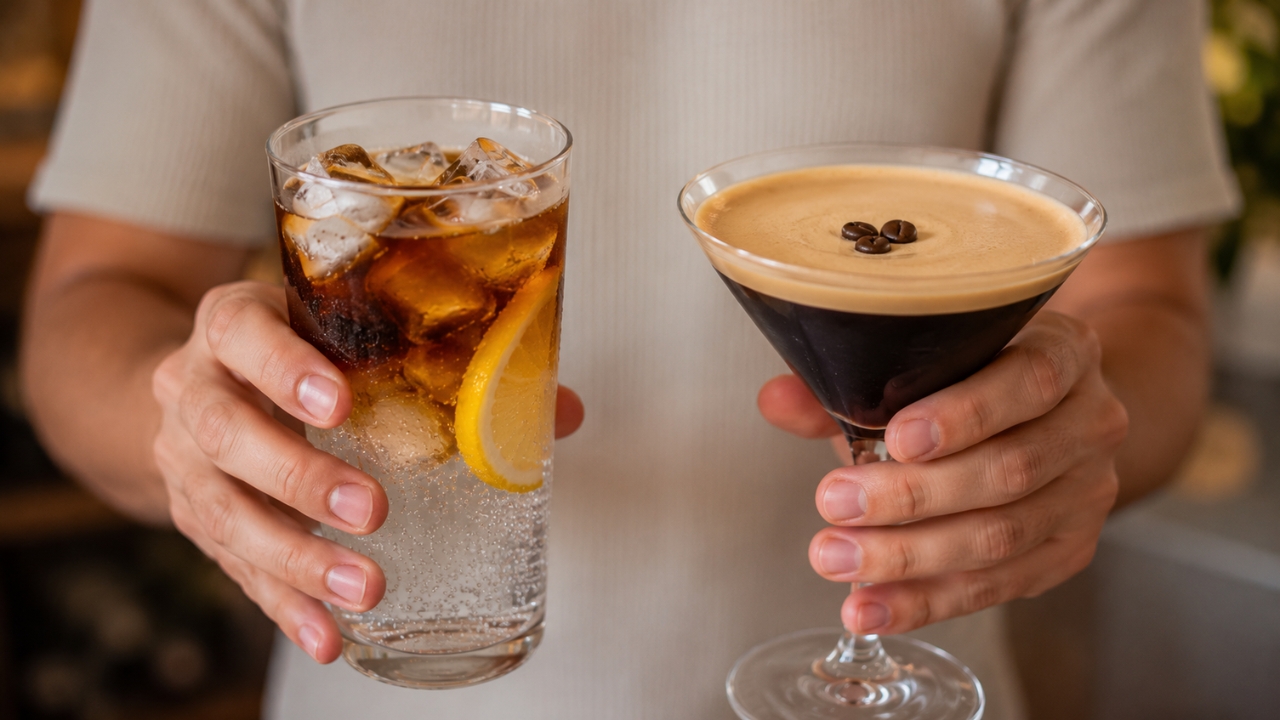
Recipe choice determines the answer more than the drink category itself. Lower-sugar tonic can give espresso tonic a clear advantage, while a heavily sweetened tonic can make the comparison much closer.
Espresso tonic can be lower in sugar, especially when prepared with low-sugar tonic, zero-sugar tonic, or tonic syrup mixed with seltzer.
Standard tonic water complicates that comparison. A drink containing 20 to 25 grams of sugar may come much closer to an espresso martini than many people expect.
For that reason, checking the tonic water label can be just as important as checking how much syrup goes into a cocktail.
Which One Is Lower in Calories?
Calories follow many of the same patterns as sugar, but alcohol introduces another important factor. Espresso itself contributes relatively little, while mixers, syrup, liqueur, and spirits account for most of the total.
A basic espresso tonic containing about 2 ounces of espresso and 6 ounces of commercial tonic water can provide roughly 60 to 80 calories.
Using tonic syrup with seltzer can lower that estimate to approximately 40 to 50 calories, depending on how much syrup is added.
- Vodka, which contributes calories through alcohol
- Coffee liqueur, which adds both alcohol and sugar
- Simple syrup, which adds concentrated sugar
- Espresso, which contributes only a small amount compared with the other ingredients
Espresso tonic therefore usually comes out ahead on calories, particularly when low-sugar tonic is used.
Exact espresso martini calorie counts are harder to generalize. Different bars and recipes use different pours, liqueurs, syrup quantities, and serving sizes, so one fixed number would not accurately describe every drink.
The Biggest Health Difference is Alcohol
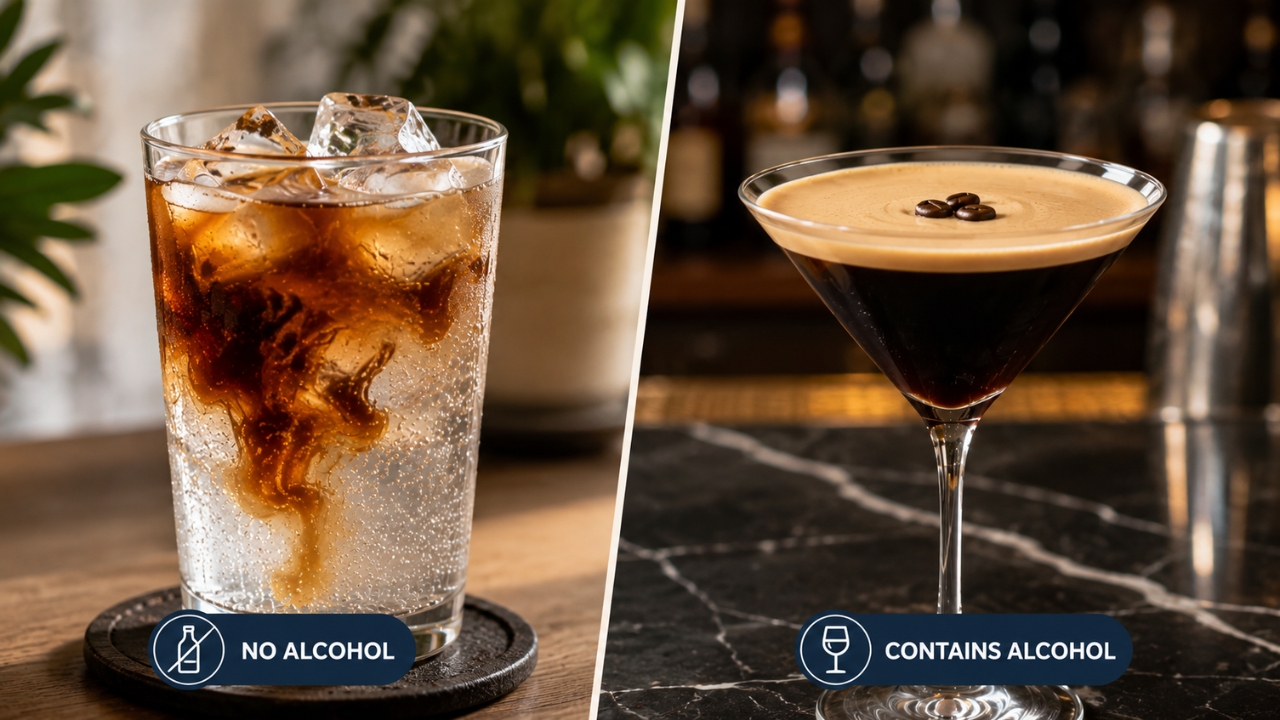
Alcohol creates the most straightforward distinction between these drinks. Sugar, calories, and caffeine can all shift according to the recipe, but alcohol is optional in one drink and fundamental to the other.
Espresso Tonic
A standard espresso tonic contains no alcohol. Basic ingredients are simply espresso, tonic water, and ice.
- Daytime coffee drinking without adding spirits
- Social occasions where alcohol is being avoided
- Brunch or warm-weather drinking
- Café orders that still feel more elaborate than standard iced coffee
Spiked versions exist, but alcohol is optional rather than central to the drink.
Espresso Martini
What is a “standard drink”? Knowing the facts helps you make informed choices.
A standard drink contains 14 grams of pure alcohol, found in:
🍺 12 oz. beer (5% ABV)
🍷 5 oz. wine (12% ABV)
🥃 1.5 oz. distilled spirits (40% ABV)Why does this matter?
It’s easy to drink… pic.twitter.com/NBskBI5ASM— SFDPH (@SF_DPH) April 15, 2026
Alcohol defines a traditional espresso martini. For context, the National Institute on Alcohol Abuse and Alcoholism defines one U.S. standard drink as containing about 14 grams of pure alcohol, equivalent to roughly 1.5 fluid ounces of 40% distilled spirits.
A classic recipe containing 2 ounces of vodka plus 0.5 ounces of coffee liqueur places it firmly in the cocktail category.
Spirits also add calories independently of sugar, meaning even a lower-sugar espresso martini still contains calories associated with alcohol.
Alcohol content can vary depending on recipe and pour size, yet removing alcohol entirely changes the drink substantially.
Verdict on Alcohol
Espresso tonic is clearly the better option when limiting alcohol is your priority.
No other comparison between these drinks is quite as straightforward. Sugar can vary, caffeine can vary, and calories can vary, but a standard espresso tonic is alcohol-free while a traditional espresso martini is not.
What About Caffeine?
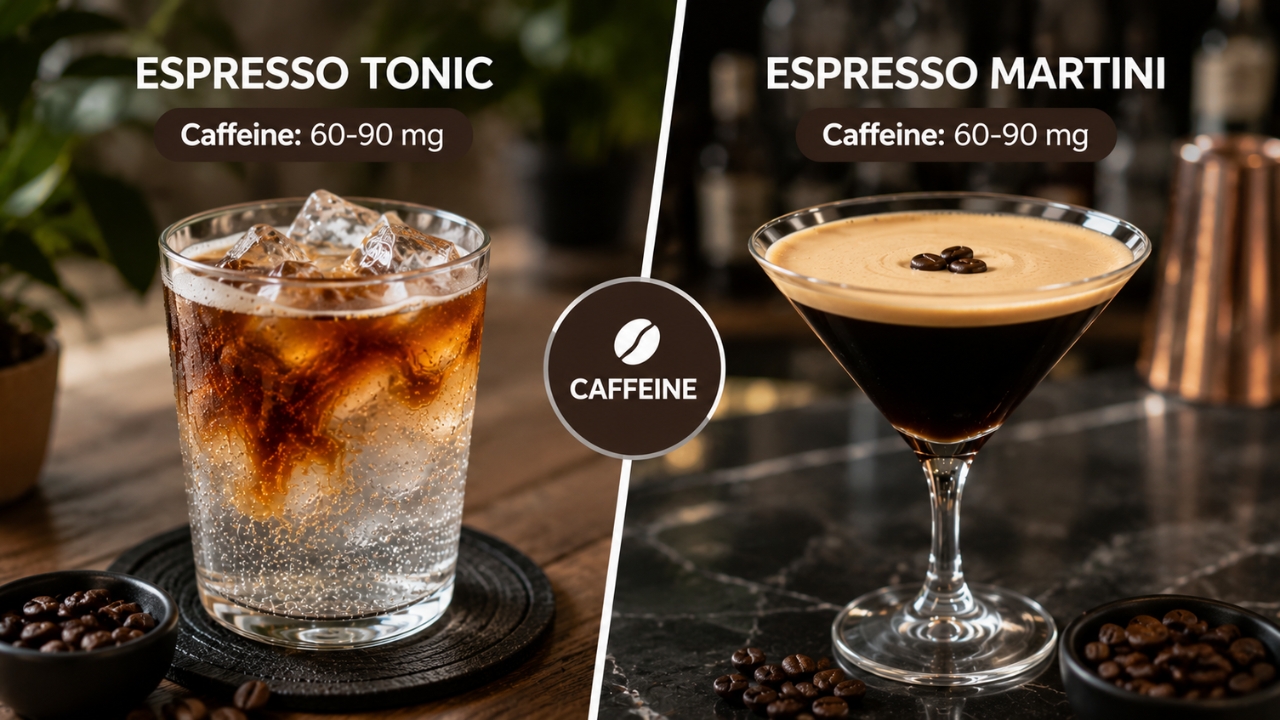
Caffeine is less predictable than alcohol or sugar because both drinks can be adjusted easily. Coffee dose, bean variety, extraction, and choice between regular or decaf espresso all influence the final amount.
Both drinks normally contain espresso, so either one can deliver a meaningful caffeine dose.
For most adults, the FDA cites 400 milligrams of caffeine per day as an amount not generally associated with negative effects, although individual sensitivity can vary considerably.
- Number of espresso shots
- Coffee variety
- Coffee dose
- Extraction method
- Serving size
A traditional espresso martini often uses a double shot, making caffeine particularly relevant when ordering one late at night.
One tested espresso preparation used a 1:1.5 brew ratio, with 18 grams of coffee producing 27 grams of espresso. Such a concentrated extraction helps coffee flavor stay noticeable alongside vodka and coffee liqueur.
Decaf espresso can be a practical alternative, especially during evening drinking. Decaf espresso can still provide floral notes, caramel-like sweetness, crema, and coffee aroma without a regular caffeine dose.
The same idea works for espresso tonic. Anyone sensitive to caffeine can use decaf espresso while keeping the tonic water, carbonation, and coffee flavor.
Neither drink automatically wins on caffeine. Coffee dose and choice between regular and decaf espresso matter much more.
Which One Tastes Better?
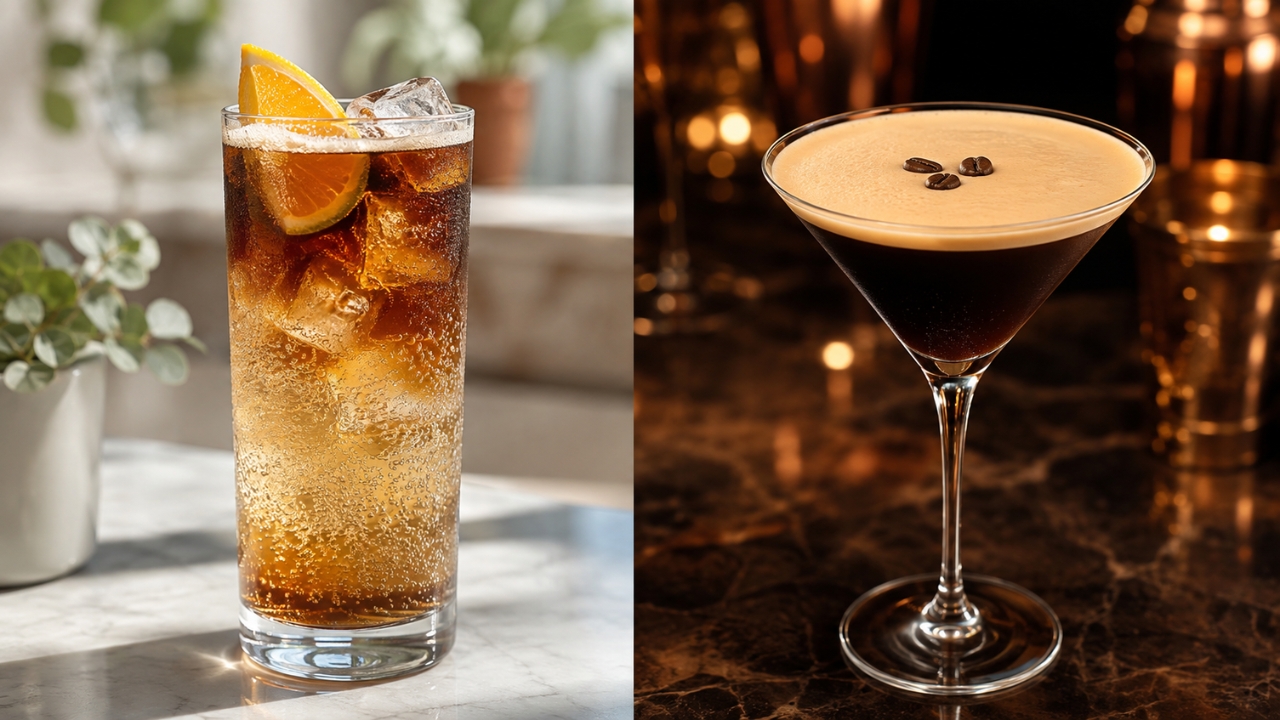
Flavor is where personal preference matters most. Espresso tonic leans toward brightness, carbonation, bitterness, and aromatic coffee notes, while espresso martini moves toward sweetness, body, spirits, and a creamier drinking experience.
Espresso Tonic May Suit You If You Like
Espresso tonic works particularly well for people who enjoy a lighter and more refreshing coffee profile.
- Crisp carbonation
- Quinine bitterness
- Citrus and botanical notes
- Fruity coffee characteristics
- Floral aromatics
- Light-roasted beans
Lighter-roasted Ethiopian and Kenyan coffees can pair especially well with tonic water because carbonation can make fruity and floral characteristics easier to notice.
Tonic water selection changes the drink considerably too.
Schweppes tends to have a noticeable citrus character. Fever-Tree generally offers a lighter and sweeter profile. East Imperial leans more floral and botanical.
Coffee selection matters just as much. Bright coffees can make an espresso tonic feel lively and aromatic, while darker roasts can make bitterness more dominant.
Espresso Martini May Suit You If You Like
Espresso martini fits drinkers who prefer a heavier coffee drink with more sweetness, body, and cocktail character.
- Roasted coffee flavor
- Chocolate or caramel-like notes
- Creamy foam
- Fuller body
- Dessert-style sweetness
- Spirit-forward cocktails
Classic dark-roast espresso can create a smooth, balanced, familiar espresso martini.
More adventurous coffees can change the profile considerably. Natural-process Sumatran espresso has produced flavors resembling brown sugar, lemon meringue, fig, and herbs in testing.
Natural-process Ethiopian coffee can add fruity and floral characteristics that make the cocktail taste less traditional.
Real espresso also brings more texture, crema, and concentrated coffee character than cold-brew concentrate, helping the cocktail feel fuller without relying entirely on sweetness.
Closing Thoughts
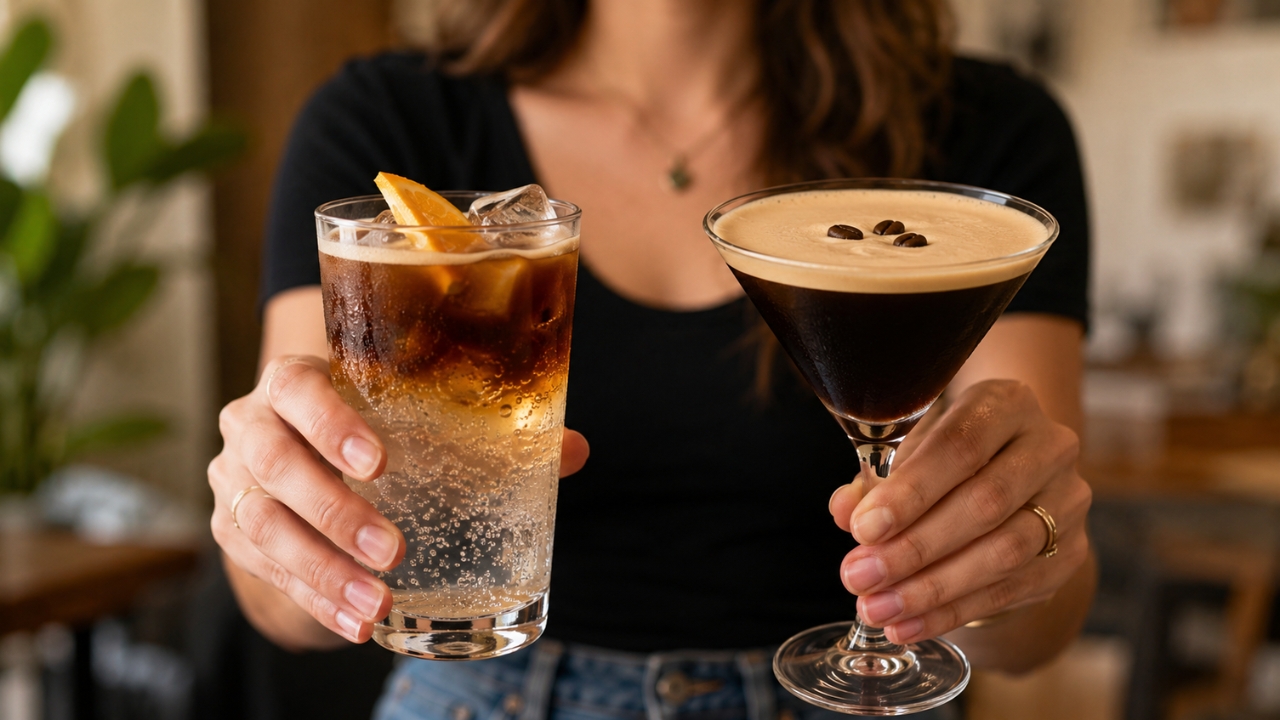
Espresso tonic and espresso martini meet very different needs. Espresso tonic is fizzy, crisp, bitter, botanical, and alcohol-free in its standard form. Espresso martini is sweeter, fuller, alcoholic, and more indulgent.
Nutritional differences are less obvious once tonic water enters the comparison. Some standard tonic waters contain substantial amounts of sugar, so an espresso tonic is not automatically a low-sugar option.