
The hot honey boom did not begin with TikTok, a fast-food chain or a marketing meeting.
Its modern story begins with a college student eating pizza in Brazil.
Mike Kurtz encountered chili-infused honey on pizzeria tables there in the early 2000s. The combination stayed with him. After returning to the United States, he spent years experimenting with peppers and honey before eventually bringing his version into Paulie Gee’s pizzeria in Brooklyn, where he was working as a pizza apprentice.
In 2010, the honey landed on a pizza topped with hot soppressata. That pizza became the Hellboy, and customers began asking to buy bottles of the condiment itself. The Mike’s Hot Honey origin story traces the product from that Brooklyn pizza to a business built around the same basic idea.
Sixteen years later, hot honey is no longer a curiosity sitting behind the counter of one Brooklyn pizzeria.
According to current Datassential menu, hot honey now appears on 11.3% of restaurant menus in the United States and has grown by nearly 230% over four years. Three quarters of consumers surveyed were aware of it, and almost half had already tried it.
Pizza deserves a lot of the credit for getting it there.
Why Hot Honey Works So Well on Pizza?
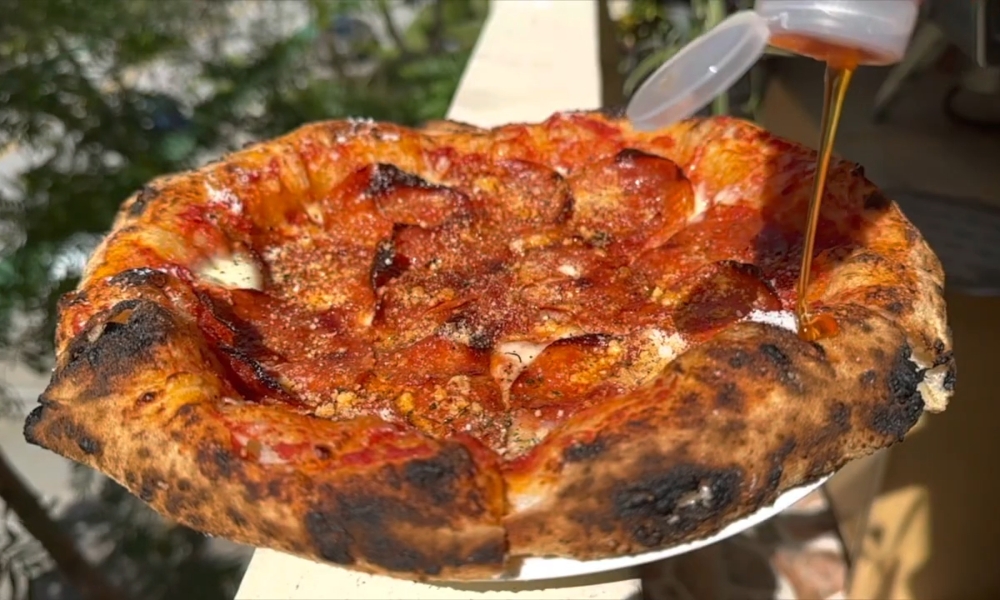
A good pizza already has several strong flavors competing for attention.
Tomato brings acidity. Cheese brings fat, salt and richness. Cured meats add more salt, spice and savory flavor. A properly baked crust contributes toasted and sometimes slightly bitter notes.
A small amount of honey lands in the middle of all of that and fills a gap.
The sweetness softens some of the aggressive saltiness from pepperoni, soppressata or sausage. Chili keeps the honey from tasting like a dessert topping. The result is not simply sweet pizza. It is a short hit of sweetness followed by heat, surrounded by salty cheese and browned crust.
That is also why hot honey usually works better as a finishing ingredient than something poured heavily over the entire pizza before baking.
A thin drizzle remains noticeable. Too much starts covering the flavors that made the pizza good in the first place.
Pepperoni Is Almost Made for It
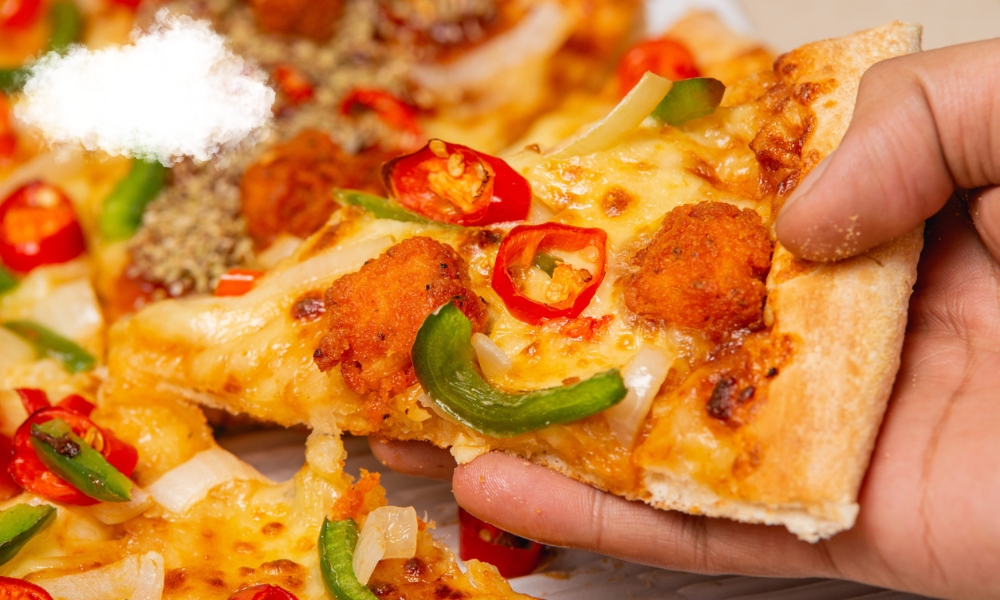
If there is one pizza where hot honey makes immediate sense, it is pepperoni.
Pepperoni already brings salt, fat and chili spice. When its edges crisp in a hot oven, the flavor becomes even more concentrated.
Honey introduces sweetness without removing the heat. Extra chili then extends that heat after the sweet first impression fades.
The same idea explains the original Hellboy pizza. Paulie Gee’s used soppressata, a cured Italian meat with enough salt and spice to stand up to honey rather than disappearing underneath it.
Mike Kurtz later described seeing customer reactions to the pizza as the moment he knew the idea could become something larger. His account of building the business shows that demand for bottles came after diners had already tasted the honey on pizza.
The condiment was effectively tested one slice at a time.
It Is Not Only for Meat-Heavy Pizza
Hot honey is often associated with pepperoni, but meat is not required.
It can work especially well when a pizza contains something creamy, salty or slightly bitter.
Ricotta gives it a mild base. Goat cheese adds tang. Blue cheese can handle considerably more sweetness. Roasted mushrooms bring savory depth, while charred onions add their own natural sweetness.
A pizza with jalapeños or another fresh chili takes the idea in the opposite direction. Instead of introducing heat to an otherwise mild pizza, the honey rounds out heat that is already there.
Even a plain cheese pizza can take a small drizzle, although there is less need to correct or balance an aggressive topping.
The key is not finding every pizza that can physically accept hot honey. It is looking for a pizza with enough salt, fat, spice or acidity to give the sweetness something to work against.
The Drizzle Should Come After the Oven
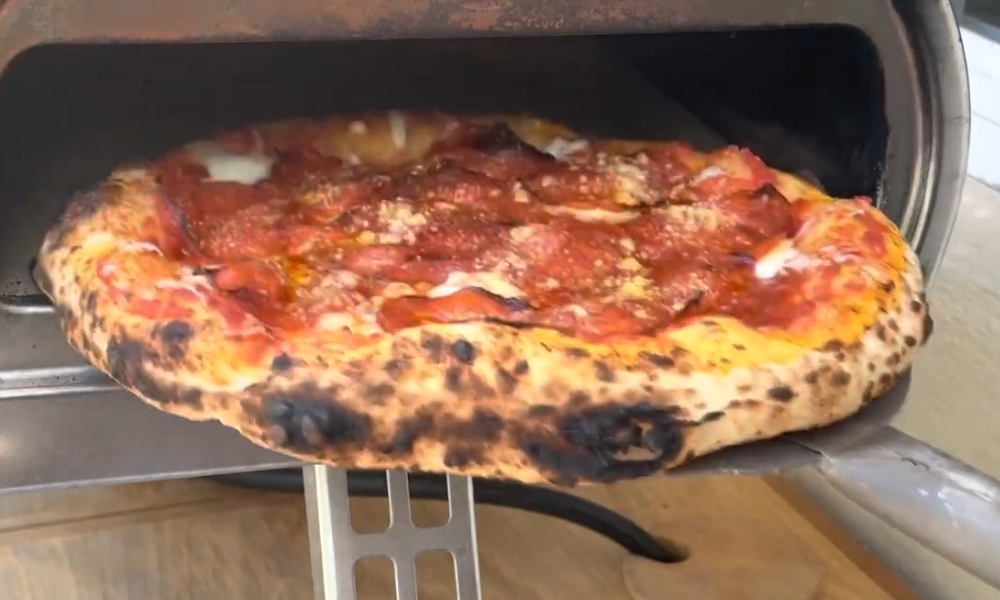
One detail makes a noticeable difference at home.
Add hot honey after the pizza comes out of the oven.
There is little advantage in exposing a finishing drizzle to the full baking temperature. Honey can darken quickly, and the clean contrast between sweet honey and chili becomes less obvious when it cooks into the surface.
Finish the pizza first, wait just long enough for the most violent bubbling of the cheese to stop, then drizzle lightly across the top.
For a standard home pizza, start with less than you think you need. You can always add another pass.
The goal is to occasionally taste the honey as you eat the slice, not to make every bite taste identical.
Hot Honey Has Moved Far Past the Pizzeria
Pizza may have provided the launchpad, but restaurants have since pushed hot honey into fried chicken, biscuits, sandwiches, cheese boards, doughnuts and even drinks.
The National Restaurant Association has continued to identify sweet-and-spicy flavors as a major menu direction, with hot honey remaining a standout even as newer ideas such as hot maple appear alongside it.
The expansion makes sense because hot honey performs two jobs with one ingredient. It sweetens and adds heat at the same time.
That is useful on fried chicken, where sweetness cuts through a heavily seasoned crust. It works with salty cheeses for the same reason. Roasted vegetables can take the glaze, and even vanilla ice cream can handle a small amount because cold, fat and sweetness soften the chili.
Pizza, however, remains the pairing most closely tied to its rise.
You Can Make Hot Honey Without Buying a Special Bottle
There is no complicated technique hiding behind it.
For a simple homemade version, gently warm honey with dried chili flakes or sliced dried chilies, allow the flavor to infuse, then strain it if you want a smooth finish.
A small amount of vinegar can sharpen the flavor, but it is optional.
Heat matters more than complexity. Boiling the honey is unnecessary. Gentle warmth helps the chili flavor move into the honey without aggressively cooking it.
Start mild. Chili strength varies enormously, and increasing the heat later is easier than rescuing a batch that overwhelms everything it touches.
If you already use honey regularly, our guide to honey and sugar explains what honey actually contains and where its nutritional reputation becomes exaggerated.
Hot Honey Is Part of a Bigger Sweet-Heat Shift
The popularity of hot honey also fits a wider change in the way people use chili.
Heat no longer needs to be the entire point of a dish.
Sweet chili sauces, gochujang, chili crisp and similar ingredients combine heat with sweetness, fermentation, savory flavor or texture. Hot honey is perhaps the simplest expression of the same idea.
Our gochujang chicken marinade uses a similar flavor principle from a very different culinary tradition. Chili works alongside sweetness and savory ingredients instead of competing to make the food as hot as possible.
Datassential now classifies hot honey in the proliferation stage of its menu adoption cycle rather than treating it as an emerging novelty. That distinction matters. Restaurants are no longer experimenting to see if customers understand the idea. Many customers already do.
So Why Is Everyone Putting Hot Honey on Pizza?
I was skeptical the first time I saw honey drizzled over pepperoni. It looked like someone had taken a perfectly good pizza and decided to turn it into a stunt.
Then you taste it.
The honey melts into the cheese and clings to the crisp edges of the pepperoni. A second later the chili comes through, and suddenly the salt, fat and heat feel sharper. The pizza is still unmistakably pizza. It just has one extra turn in every bite.
I would not pour hot honey over everything that comes out of an oven. A simple Margherita already has everything it needs. But when it comes to pizza with spicy toppings like pepperoni, soppressata, sausage, blue cheese or jalapeños, I understand exactly why people keep reaching for the bottle.