
You bought a bag of potatoes last week, left it in the cupboard, and now some of them have little shoots growing out of the skin. It is annoying, especially when you were planning to use them for dinner. But do you really need to throw them away?
Yes, you can still eat potatoes that have started sprouting, but only if they are firm, have only small sprouts, and show no significant green patches or signs of spoilage. You will need to remove the sprouts, cut out the eyes, and peel the potatoes before cooking.
However, if the potatoes have grown long sprouts, become soft and wrinkled, or developed extensive green areas, I would throw them away. Removing the visible sprouts does not guarantee that a badly deteriorated potato is safe.
The condition of the potato matters much more than the mere appearance of a tiny shoot. Let me explain what to look for and how to handle the potatoes you already have.
Why Do Potatoes Start Sprouting in the First Place?
Potatoes are still alive after they have been harvested. Unlike an apple or a carrot, a potato is a tuber with buds that can grow into an entirely new plant. The small indentations scattered across its skin are called eyes, and those are where the sprouts develop.
As potatoes sit in storage, they gradually come out of their natural dormant period. Warmer conditions encourage the buds to grow, which explains why a bag left in a warm kitchen cupboard may start sprouting sooner than expected.
The little white, pink, or purple shoots are simply the beginning of new growth. Their appearance does not automatically mean the potato has spoiled.
However, sprouting also tells you that the potato is changing. It uses its stored nutrients to support the shoots, and as the process continues, the potato can lose moisture, become wrinkled, and develop a less pleasant texture.
There is also a food safety concern, which becomes more important as the potato deteriorates.
How to Tell if a Sprouted Potato Is Still Safe to Eat?
Start by looking at the potato itself rather than the sprouts. Pick it up and gently squeeze it. Does it still feel firm, or has it become soft and shriveled?
A potato with one or two tiny shoots and otherwise healthy flesh is a reasonable candidate for trimming and cooking. If the shoots are long and the potato has become noticeably wrinkled, I would not use it.
The University of Minnesota Extension advises removing sprouts before preparing potatoes and avoiding potatoes with extensive green areas. Its storage guidance also explains why keeping potatoes in the dark matters.
- Firm potato with a couple of tiny sprouts. Remove the sprouts and eyes completely, peel the potato, and cook it.
- Potato with a small green spot. Remove the green tissue generously. If the green color extends into the flesh or covers a large area, discard it.
- Soft, wrinkled potato with several long sprouts. Throw it away. At that stage, trimming the shoots is not enough reassurance.
- Potato with mold, wet patches, or signs of rot. Discard it, even if the sprouts are small.
Recognizing the signs that food has spoiled is an important kitchen habit. The same principle applies when checking the signs that food has gone bad, although the warning signs differ between ingredients.
One thing I would not do is taste a raw potato to decide if it is safe. A bitter flavor can indicate elevated levels of natural toxins, but the absence of bitterness is not proof that a potato is safe.
What Is Actually Dangerous About Sprouted Potatoes?
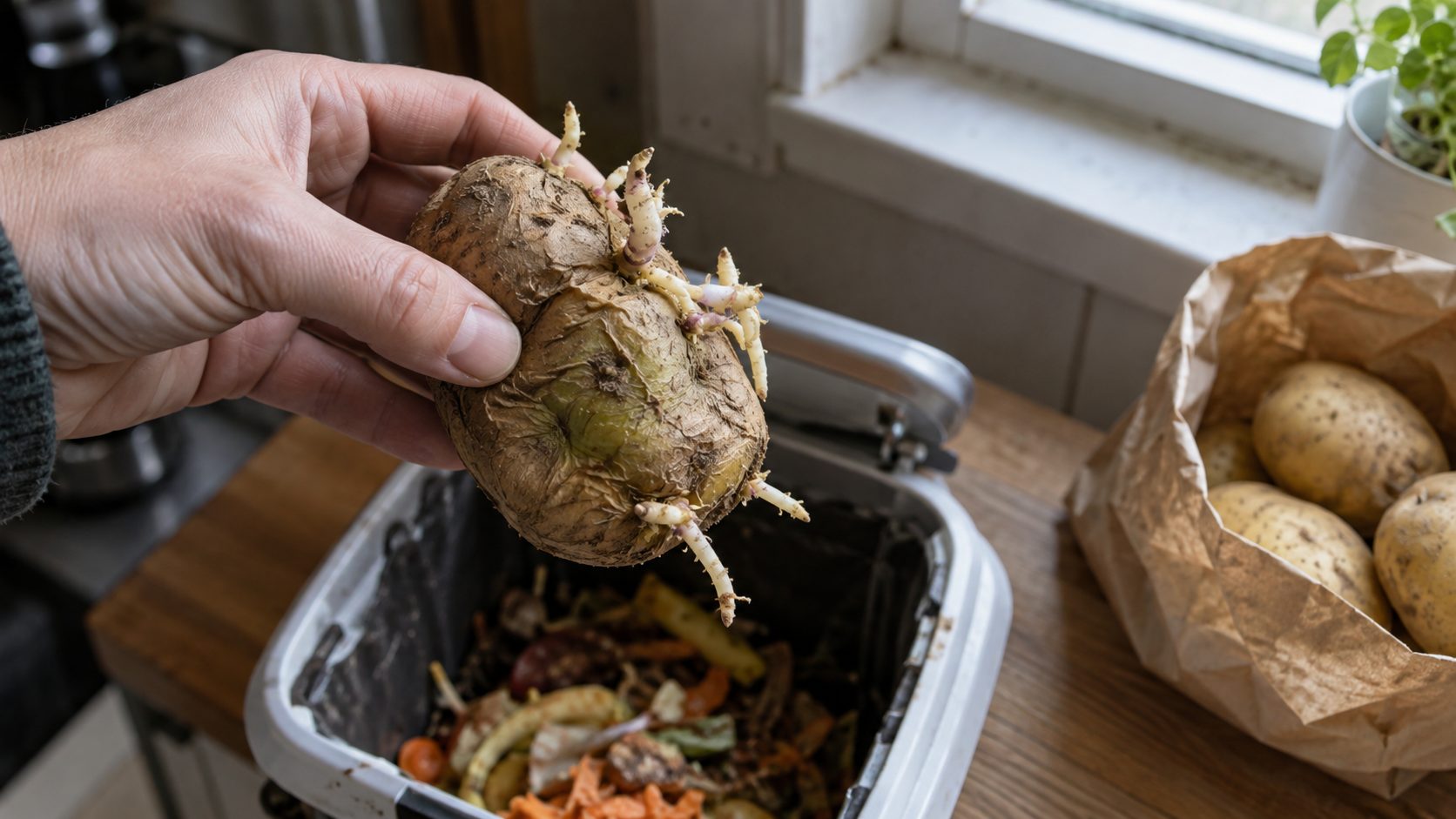
The concern comes from two naturally occurring substances called solanine and chaconine. Both belong to a group of compounds known as glycoalkaloids.
Potatoes contain small amounts of these substances naturally. They help protect the plant from pests and other threats. However, concentrations can increase in sprouts, green areas, and damaged parts of the potato.
Eating excessive amounts can cause stomach pain, nausea, vomiting, and diarrhea. Severe cases of glycoalkaloid poisoning are rare, but the potential symptoms are serious enough that damaged or heavily sprouted potatoes should not be treated casually.
The UK Food Standards Agency explains that green, damaged, and sprouted parts can contain elevated levels of glycoalkaloids. It advises cutting away affected areas and storing potatoes somewhere cool, dark, and dry.
Now, a small sprout does not tell you the exact toxin concentration inside the potato. There is no reliable way to measure that by looking at it in your kitchen.
For that reason, I would keep firm potatoes with limited sprouting after proper trimming, but discard those with extensive shoots, greening, or deterioration.
Food safety decisions are not always as simple as checking a date or spotting one visible change. Similar questions arise when deciding whether expired tortillas are safe to eat.
Can You Cut the Sprouts Off and Cook the Potato?
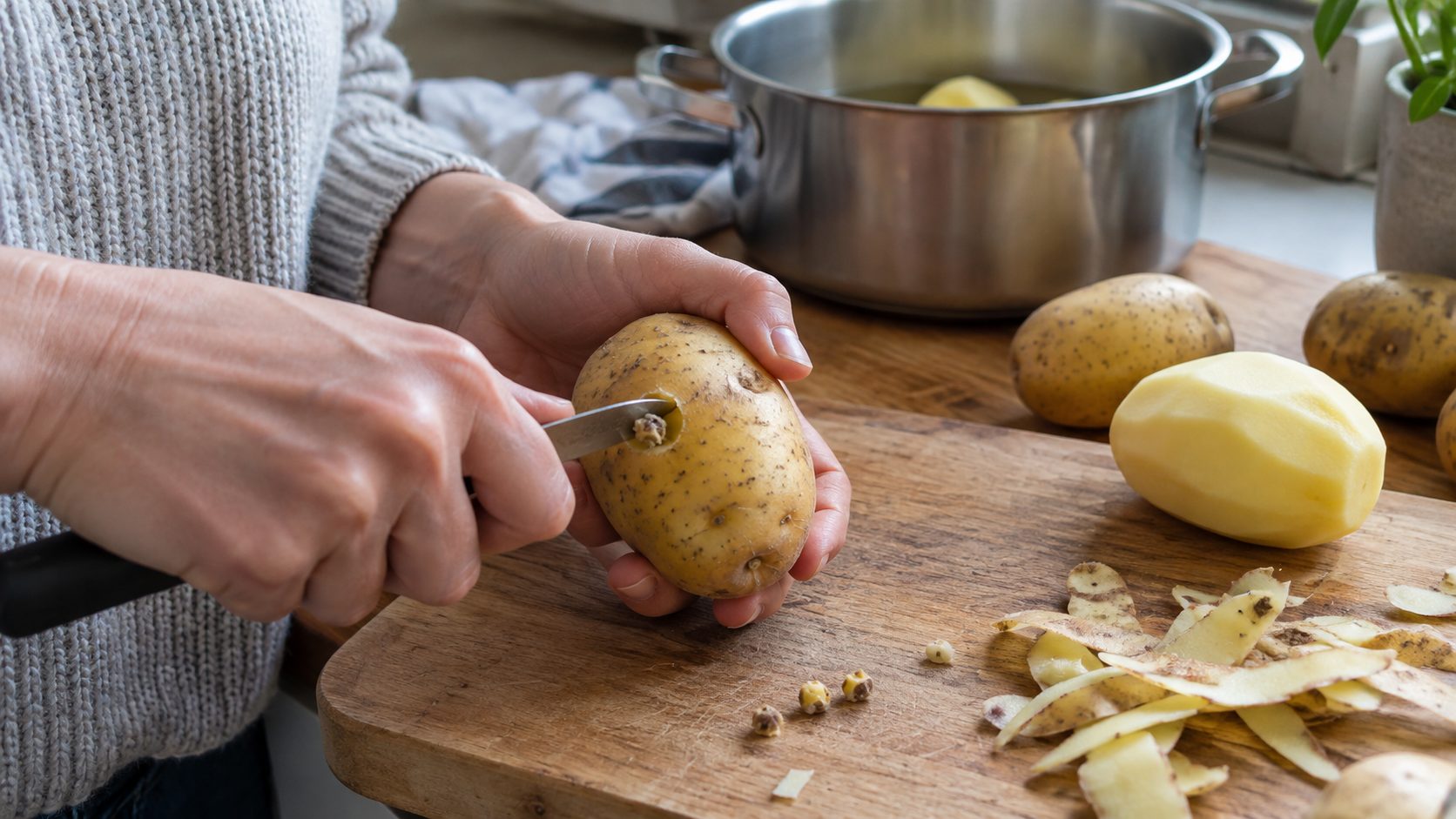
For a firm potato with only small sprouts, yes. Removing the affected areas is the sensible way to prepare it.
Use a small paring knife or the pointed end of a potato peeler to take out the sprouts and the little eyes beneath them. Do not simply snap off the visible shoot and leave its base behind.
Once you have removed the eyes, peel the potato and inspect the flesh. If it looks normal, has no significant green areas, and remains firm, you can continue with your recipe.
I would use lightly sprouted potatoes for mashed potatoes, boiled potatoes, or a soup where the potatoes are peeled before cooking. There is no reason to invent a special recipe just because a potato has grown a tiny shoot.
If you were planning to roast potatoes with their skins on, fresh potatoes without sprouts or green spots are a more suitable choice.
What if the Potato Has Green Skin?
Green skin is another warning sign, and it deserves attention even when the potato has not started sprouting.
The green color itself comes from chlorophyll, which is harmless. The problem is that exposure to light can also encourage potatoes to produce more glycoalkaloids.
A tiny green patch near the surface can be cut away generously. However, a potato with extensive greening, particularly beneath the skin, should go in the trash.
Do not assume that a potato is safe simply because you have peeled away the green color. If the discoloration extends deeply into the flesh, removing the outer skin will not necessarily remove the affected tissue.
And if a cooked potato tastes unusually bitter or causes a burning sensation in your mouth, stop eating it.
Will Boiling or Roasting Kill the Toxins?
Unfortunately, ordinary cooking does not reliably destroy solanine and chaconine.
Some cooking methods can reduce their levels, but boiling, baking, and roasting are not dependable ways to make heavily sprouted or green potatoes safe.
Cooking a questionable potato for another 20 minutes is therefore not a solution. The safest decision comes before you turn on the stove, when you inspect the potato and decide if it is suitable for cooking.
If your potatoes are firm and have only small sprouts, remove the sprouts and eyes, peel them, and prepare them normally. If they have deteriorated significantly, choose another ingredient for dinner.
How to Store Potatoes So They Do Not Sprout Too Quickly

Potatoes last longer when they are stored away from light and excessive warmth. A cool, dark cupboard, pantry, or cellar is suitable if it has enough ventilation.
Light exposure encourages greening, and warm conditions encourage growth. That makes a sunny kitchen counter or a cupboard next to the oven an unsuitable place for keeping a large bag of potatoes.
I would also avoid leaving them in tightly sealed plastic packaging where moisture collects. A paper bag, ventilated basket, or suitable storage container allows air to circulate.
If you have bought more potatoes than you expect to use, check them regularly. Removing damaged or rotting potatoes from the bag helps protect the remaining ones.
Can You Keep Potatoes in the Fridge?
Yes, refrigeration is an option. Modern UK Food Standards Agency guidance permits storing potatoes either in the fridge or in a cool, dark, dry place.
Cold storage can affect the way potatoes behave during cooking, particularly their sugar content and browning. If you have a suitable cool pantry, it remains a reasonable storage choice. Refrigeration is helpful when your kitchen is warm and you have no cooler storage area.
The important part is keeping the potatoes away from light, checking their condition, and following any specific storage instructions on the packaging.
Can You Freeze Potatoes Before They Sprout?
If you have far too many potatoes, freezing them after cooking or blanching is another way to prevent waste.
Raw potatoes contain plenty of water, and freezing them without preparation can leave their texture unpleasant after thawing.
Instead, peel and cut fresh potatoes, blanch them briefly, cool them properly, and freeze them in suitable containers. They will be ready for roasting or other cooked dishes later.
Freezing will not repair a potato that has already deteriorated. Start with potatoes that are fresh and in suitable condition for eating.
What Happens if You Accidentally Eat a Sprouted Potato?
If you have already eaten potatoes that had a few small sprouts removed before cooking, there is no reason to assume that you have been poisoned.
The risk depends on the condition of the potatoes, the amount eaten, and the concentration of glycoalkaloids. A firm potato with properly removed sprouts is not equivalent to a heavily green or shriveled potato.
Symptoms of glycoalkaloid poisoning can include nausea, vomiting, diarrhea, and abdominal pain. More serious poisoning can produce additional symptoms, including neurological effects.
If you become unwell after eating green or heavily sprouted potatoes, contact a healthcare professional or poison control service. Severe symptoms call for urgent medical attention.
Do not try to make yourself vomit or use home remedies to treat suspected poisoning.
What Else Can You Do With Potatoes That Have Sprouted?
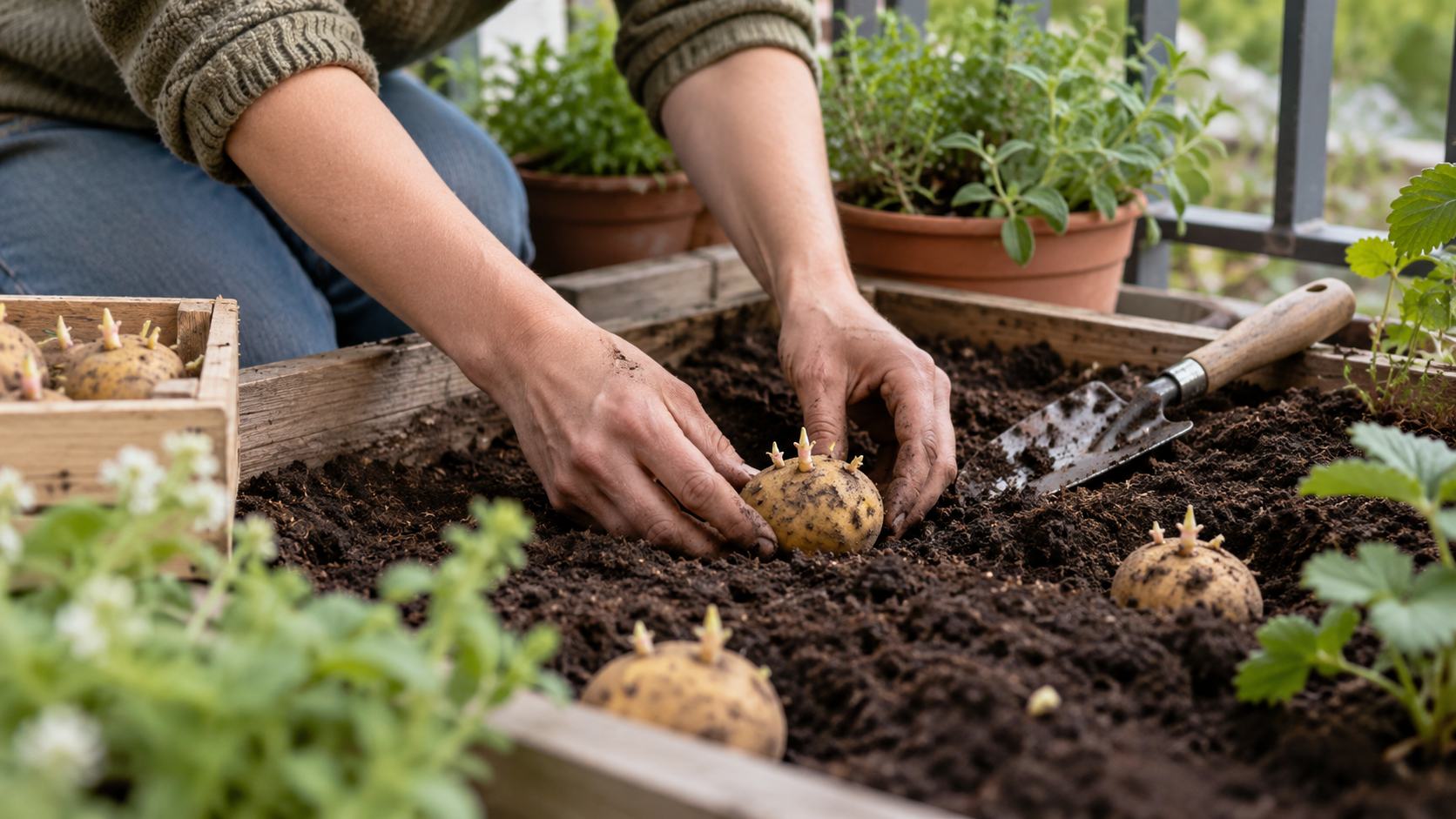
If a potato has developed healthy shoots but is no longer suitable for eating, you might be tempted to plant it.
Potatoes grow from tubers, so a sprouted potato can produce a new plant under suitable conditions. Gardeners sometimes allow seed potatoes to develop short shoots before planting.
However, grocery store potatoes are not always suitable planting material. They may carry diseases that affect future crops. Certified seed potatoes are a more reliable choice if you plan to grow a proper potato crop.
For a small gardening experiment, a sprouted potato offers an opportunity to see how a new potato plant develops. Just remember that the leaves and sprouts of the potato plant are not edible.
Frequently Asked Questions
My Advice Before You Start Cooking
If the potatoes are firm and have only a couple of tiny sprouts, I would remove the shoots and eyes, peel them, and cook them for dinner. There is no need to waste food simply because a potato has begun growing.
However, I would not try to save a potato that has become soft, shriveled, heavily sprouted, or extensively green. Cutting off the most obvious damage does not reliably deal with everything that may have changed inside it.
A quick inspection before peeling is usually all you need to make the decision. Once you have discarded the questionable potatoes, the remaining ones can go straight into your usual recipe.