
Most people hear “pesto” and immediately picture basil, pine nuts, Parmesan, garlic, and olive oil. Pesto alla Genovese earned such international popularity that its ingredient list has become almost inseparable in many people’s minds from pesto itself.
History tells a broader story. Pesto takes its name from the Italian verb pestare, meaning “to pound” or “to crush.” Such a name points toward preparation rather than one required herb.
Ancient Roman cooking even offers an earlier relative called moretum, made by crushing herbs, cheese, garlic, oil, and sometimes pine nuts together.
The modern variant is not simply moretum under another name, but both preparations show how long cooks have used crushing and pounding to turn aromatic ingredients into concentrated sauces.
Basil defines one famous pesto. Method, texture, and an adaptable ingredient structure explain the larger category.
Pesto Is a Method, Not One Recipe
Traditional pesto begins with physical force. Ingredients are crushed against a mortar using a pestle until separate components become a cohesive paste. Texture can range between dense and spoonable or softer and closer to a purée.
Mortar preparation usually begins with herbs, garlic, and nuts worked in a circular motion. Cheese joins as the mixture develops, followed by olive oil added gradually. Slow incorporation helps produce a creamy consistency while keeping individual flavors connected.
Texture matters across many concentrated sauces. Tahini offers another good example, since processed seeds create body and a smooth consistency with very few ingredients.
Preparation technique also changes what reaches the plate:
Preparation Method
Effect on Texture
Mortar and pestle
Gradually releases oils and creates a creamy, integrated texture.
Hand chopping
Leaves more noticeable pieces and produces a coarser sauce.
Food processor or blender
Works faster and creates a smoother, more uniform result.
Classic Genovese pesto uses pine nuts, cheese, and olive oil to add fat, body, and cohesion. Garlic contributes pungency, while basil provides its recognizable herbal character.
None of those ingredients alone explains why the finished sauce is pesto. Crushing them into a concentrated paste is just as important.
Why Basil Became Synonymous With Pesto
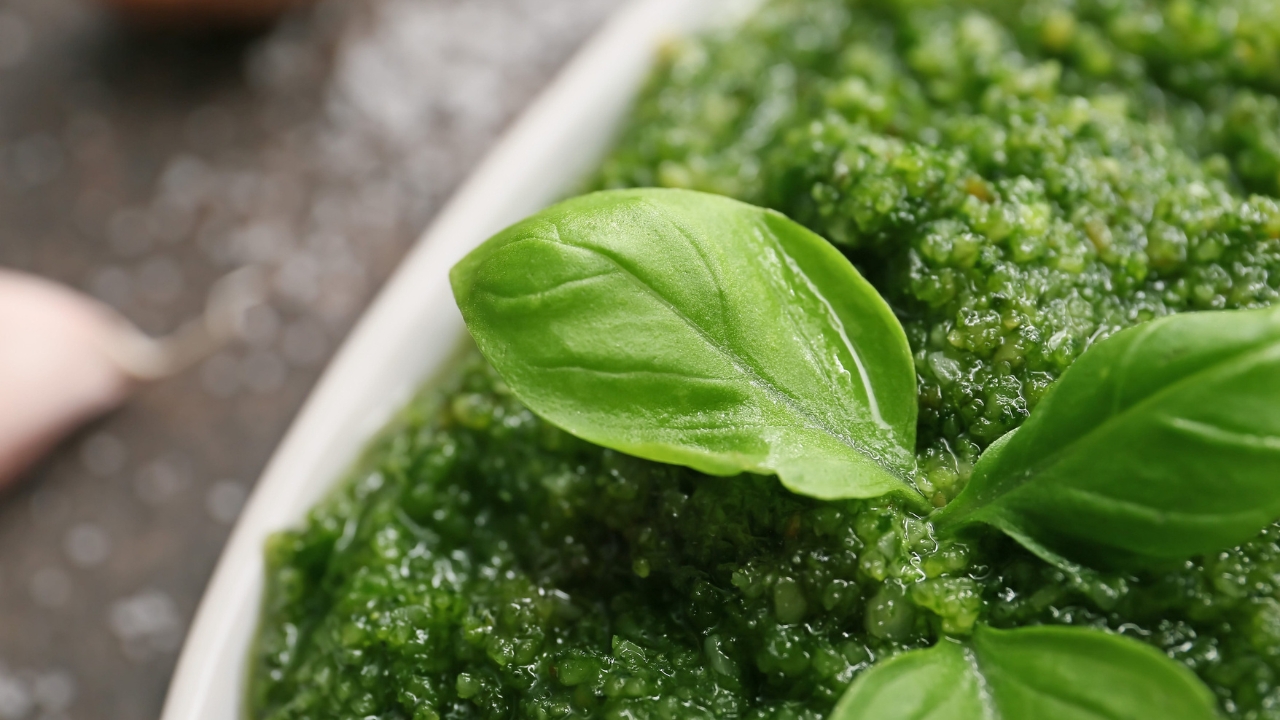
Genoa and the surrounding Ligurian region gave pesto alla Genovese its identity. Genovese basil sits at the center of that preparation alongside garlic, pine nuts, olive oil, and Parmesan or pecorino.
Basil supplies much of its green color and fresh, lightly peppery flavor. Cheese contributes salt and umami, garlic adds sharpness, nuts bring body, and olive oil connects everything into a smooth sauce. Oil also plays a major role in how aroma spreads across a dish, a principle that becomes especially clear with ingredients such as truffle oil.
Written records helped establish pesto alla Genovese as a recognizable preparation during the nineteenth century. One early printed version appeared in Emanuele Rossi’s La Vera Cucineria Genovese in 1852. Giovanni Battista Ratto’s La Cuciniera Genovese followed in 1863 with another important early record.
International popularity later made Genovese the default version in supermarkets, restaurants, and home kitchens. As a result, “pesto” and “basil pesto” often get treated as interchangeable terms.
Italian cooking itself makes that equation difficult to defend. Several regional preparations use completely different ingredients while still belonging to the pesto family.
Can We Make it Without Basil?
View this post on Instagram
Regional Italian recipes show just how flexible pesto can be. Geography, agriculture, and local taste often matter more than adherence to one fixed formula.
Several well-known examples make that flexibility especially clear:
Variety
Main Ingredients
What Makes It Different
alla Trapanese
Fresh tomatoes, almonds, basil, garlic, olive oil, cheese
Almonds replace pine nuts, while tomatoes give the sauce its red color.
alla Calabrese
Roasted or charred peppers, onions, ricotta, almonds, chili
Uses cooked vegetables and has a creamier, mildly spicy character.
di Pistacchi
Pistachios, olive oil, salt, Grana Padano or similar cheese
Pistachios form the main base, while basil may be optional.
alla Siciliana
Fresh tomatoes, ricotta, almonds, basil, garlic, Parmigiano
Ricotta creates a creamier texture, while tomatoes and almonds give it a distinctly Sicilian profile.
Sun-Dried Tomato
Sun-dried tomatoes, almonds or pine nuts, olive oil, basil
Concentrated tomato flavor replaces the herb-heavy character associated with Genovese pesto.
Arugula
Arugula, almonds or other nuts, olive oil, cheese
Arugula replaces basil and gives the sauce a sharper, more peppery flavor.
alla Genovese
Genovese basil, pine nuts, garlic, olive oil, Parmigiano, pecorino
Classic green pesto and the version most strongly associated with the word “pesto.”
Other versions move even further away from basil. Dandelion greens, carrot tops, wild fennel, kale and spinach can replace the familiar herb. Walnuts, almonds, pistachios, or seeds can take the place of pine nuts.
Such changes do not automatically turn it into an imitation of the Genovese original. Regional cooking often starts with ingredients that grow locally and develops sauces around what is readily available.
Pesto therefore works less like a fixed formula and more like a family of related preparations.
So What Actually Makes It Pesto?
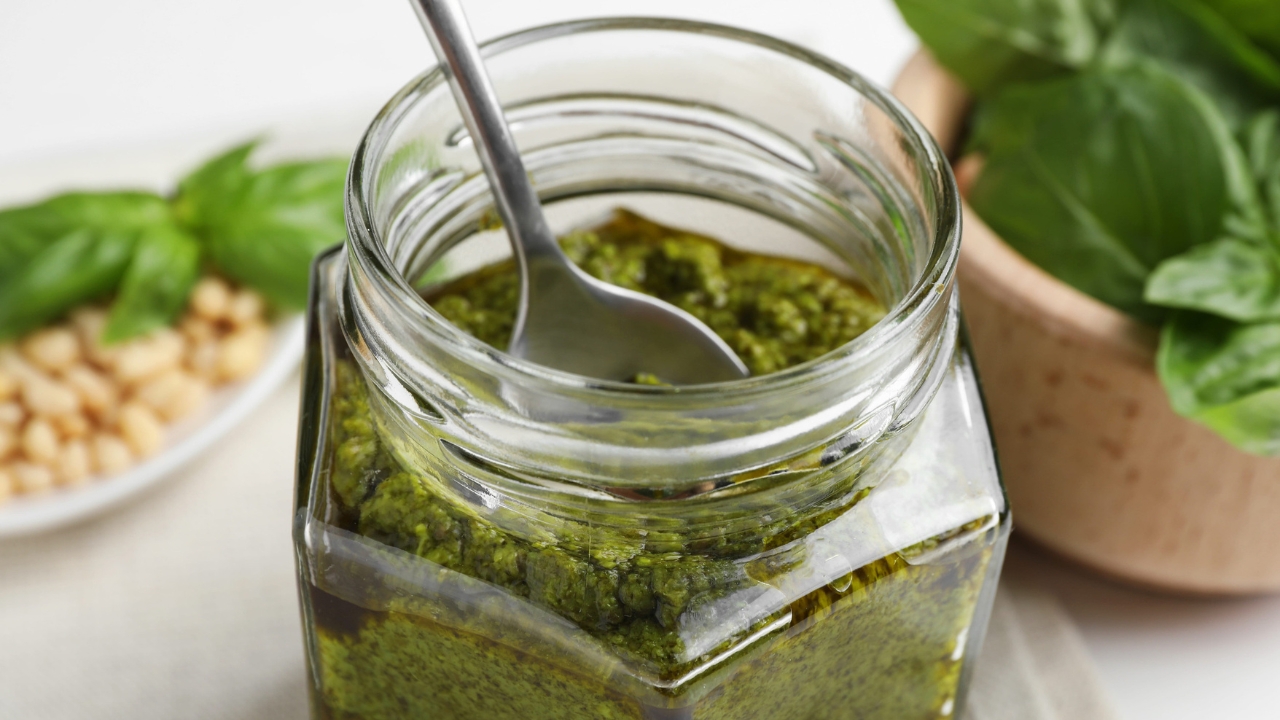
No single ingredient appears in every pesto. Basil can disappear. Pine nuts can disappear. Parmesan can disappear. Even raw ingredients are not an absolute requirement, as Calabrian versions demonstrate.
Color provides another clue that basil should not define the category. It can be bright green, pale green, red, orange, or beige depending on its ingredients.
Tomatoes, peppers, pistachios, almonds, walnuts, leafy greens, and herbs can all become central ingredients. Calling every variation “basil pesto with substitutions” misses what regional pesto traditions actually show.
Method and structure create the family resemblance.
Summary
@majasrecipes day 79/365: Easy Pesto Sauce Recipe (10-Minute Homemade Pesto)✨ This is the only pesto sauce recipe I make anymore — bright green, garlicky, packed with fresh basil and real parmesan, and it comes together in 10 minutes in one food processor. No jar. No weird oils. Just seven ingredients and a blender that does all the work for you. Instructions: 1. Follow the full recipe instructions on my blog, you can click the link in my bio, or visit (or comment “yes”, I’ll dm it to you) Or google “majas recipes PESTO SAUCE” Welcome to my 365 days of recipes! Cannot believe it’s finally happening… so many of you remember my 100 day series, and this has been in the works for quite some time! I’m so excited to be sharing beginner friendly recipes tailored to every season — so stick around, because there’s something coming for everyone all year long! Follow along for more quick & easy recipes like this one!! Stay Hungry, Maja♥️👩🏻🍳 See you tomorrow for day 80🫶🏻 #pesto #pestosauce #pastalover #pastarecipe #easyrecipe ♬ Come On Eileen – Single Edit – Dexys Midnight Runners & Kevin Rowland
Basil belongs at the center of pesto alla Genovese, but it does not control the definition of pesto as a whole. Italian regional cooking includes pestos built around tomatoes, almonds, pistachios, peppers, walnuts, leafy greens, and other local ingredients.
Consistency comes less through a required shopping list and more through transformation. Ingredients are crushed or processed until they become an intense, textured sauce capable of carrying concentrated flavor.
Even the name points back to that action. Pestare describes pounding and crushing, making it almost a verb disguised as a noun.