
For most home cooks, cooked rice is best eaten within 1 to 2 days, if you want the more cautious rice-specific rule.
Broader leftover guidance from U.S. food safety agencies says refrigerated leftovers are generally safe for 3 to 4 days, as long as they were chilled promptly and kept cold.
Rice sits in an awkward middle ground because it is a common vehicle for Bacillus cereus, a bacterium linked to food poisoning when cooked rice spends too long at room temperature.
So, if you want one practical answer: eat leftover rice within 2 days for the safest margin, and do not push past 4 days under any circumstances. That advice lines up with the stricter rice guidance while still respecting mainstream leftover rules.
Why Rice Needs More Care Than Many Other Leftovers
Rice has a reputation in food safety circles for a reason. Uncooked rice can contain spores of Bacillus cereus.
Cooking kills many microbes, but spores can survive. If cooked rice then sits out on the counter for hours, those spores can germinate and multiply. In some cases, they can produce toxins that are heat-stable, which means reheating later may not make the food safe again.
That is why the real risk is usually not the fridge itself, but what happened before the rice went into the fridge.
A container of rice that was cooled quickly and refrigerated within 2 hours is a different story from rice that sat on the stove all evening.
Also Read: Did you know that even rice cakes can expire? Be careful with rice cause if you consume it spoiled, it can cause big consequences for your health.
What Authoritative Sources Actually Say
General U.S. Leftover Guidance
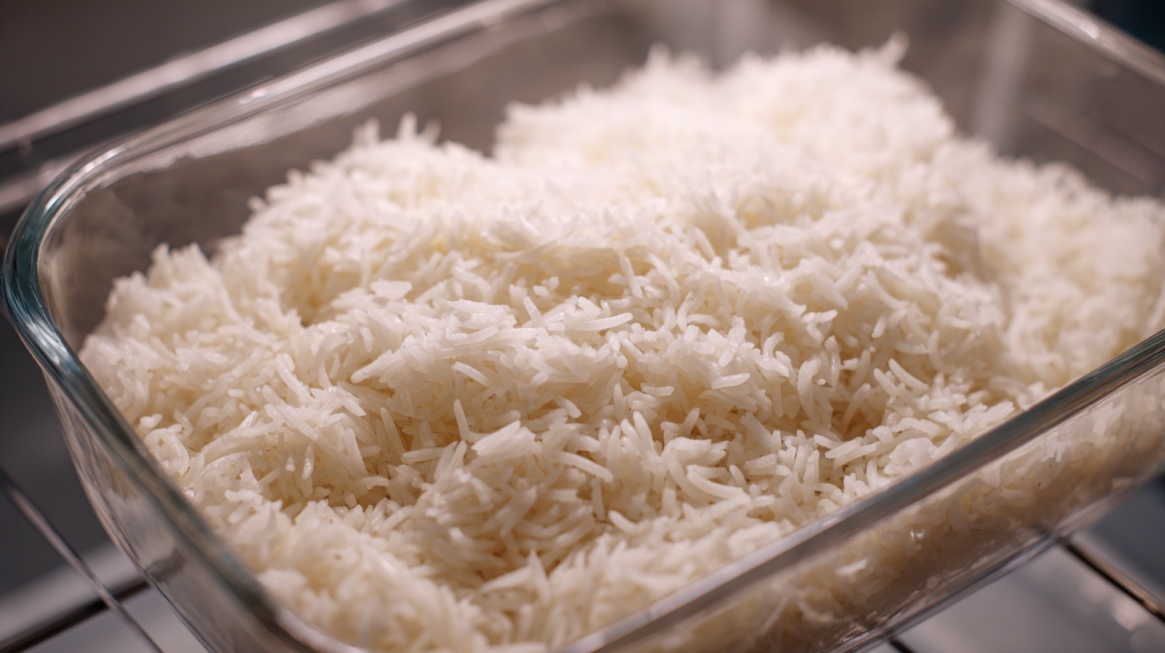
The USDA and FoodSafety say leftovers should be refrigerated within 2 hours and generally eaten within 3 to 4 days. They also advise reheating leftovers to 165°F.
Stricter Rice-Specific Guidance
Some food safety agencies take a tighter view with rice. The UK Food Standards Agency says cooled rice should be refrigerated and eaten within 24 hours if it will be reheated.
New South Wales Food Authority says cooked rice should be eaten within 2 days. NHS advice for children’s food also recommends cooling rice quickly and using it within 24 hours.
@valeria.lipovetskyCan we just live♬ original sound – valerialipovetsky
The Practical Takeaway
Put together, the guidance points to a simple hierarchy:
| Situation | Safer Time Limit |
| Rice cooled quickly and stored properly | 1 to 2 days is best |
| Rice handled well under standard U.S. leftover rules | Up to 3 to 4 days |
| Rice left out too long before refrigeration | Throw it away |
That more cautious approach makes sense because once toxin has formed, reheating is not a reliable safety fix.
How Fast Rice Should Go Into the Fridge
The 2-hour rule matters. USDA guidance says leftovers should be refrigerated within 2 hours of cooking, or within 1 hour if the surrounding temperature is above 90°F. Food should also be cooled in shallow containers so it chills faster.
With rice, faster is better. A large, deep pot of hot rice cools slowly, which gives bacteria more time in the temperature range where they grow best. Spreading rice into smaller portions or shallow containers helps reduce that risk.
A Good Routine at Home
A sensible routine looks like this:
- Finish the meal.
- Let the rice stop steaming heavily.
- Transfer it into a shallow container.
- Refrigerate it within 2 hours.
- Label it with the date if you meal prep often.
That small habit does more for safety than any reheating trick later.
How To Tell If Fridge Rice Has Gone Bad
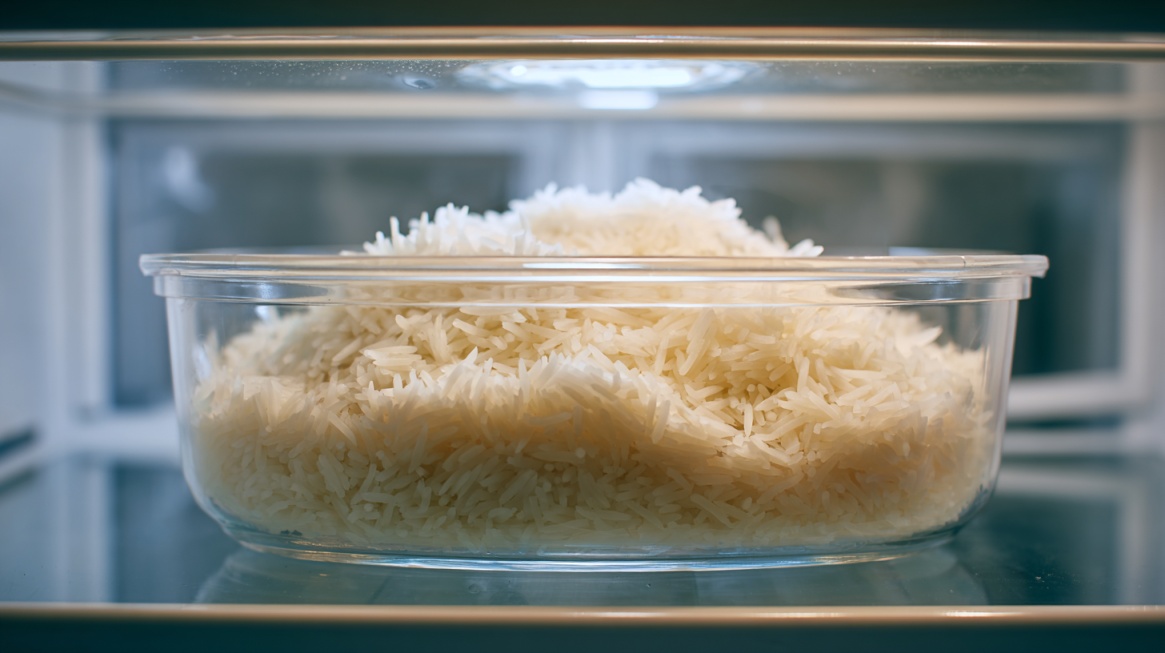
Spoiled rice does not always announce itself clearly, which is why the calendar matters. Still, obvious warning signs include:
- Sour or odd smell
- Slimy or unusually sticky texture
- Dry, crusted-out patches combined with stale odor
- Visible mold or discoloration
If any of those show up, throw it out. If you cannot remember when you made it, throw it out. Leftover rice is cheap. Food poisoning is not.
General food safety advice consistently warns that risky leftovers should not be tasted to “check.”
Can You Reheat Rice Safely?
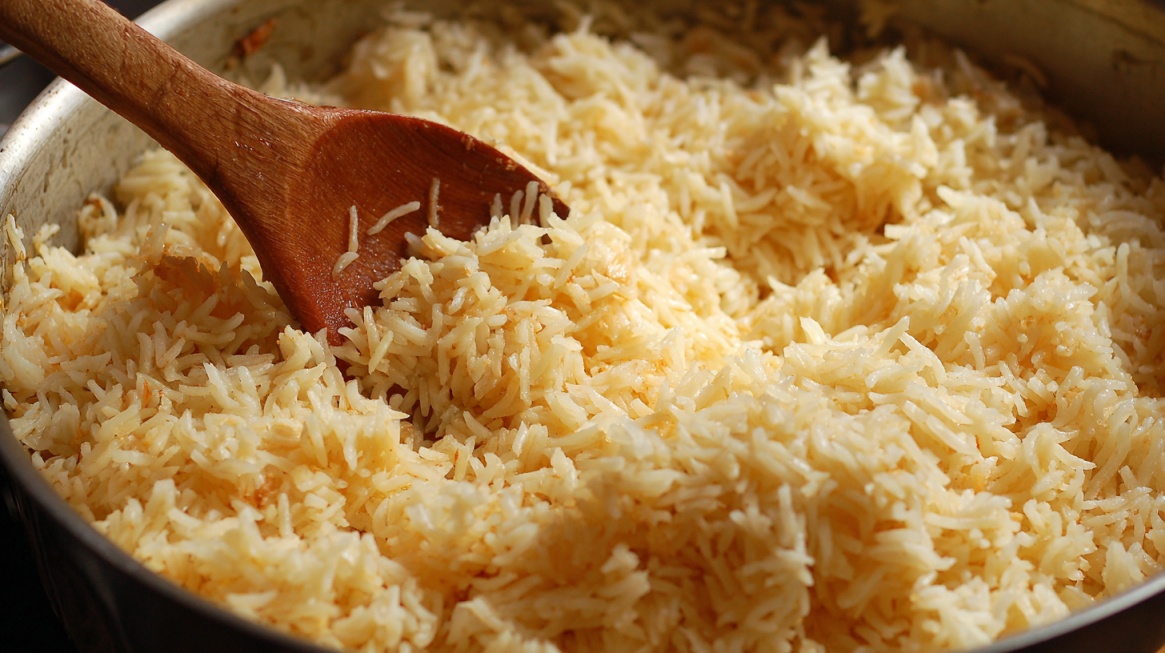
Yes, but only if it was stored safely in the first place. Reheating should bring rice to 165°F or until it is steaming hot throughout. Microwave reheating is fine, but stir partway through so cold spots do not remain in the middle.
The catch is important: reheating kills many bacteria, but it may not destroy the heat-stable toxin associated with Bacillus cereus. In other words, reheating works for rice that was handled correctly. It is not a rescue plan for rice that sat out too long.
Should Rice Be Reheated More Than Once?
The stricter advice says no. NHS guidance says rice should never be reheated more than once.
Even where that exact wording is not universal, repeated cooling and reheating adds more opportunities for temperature abuse and quality loss.
In a home kitchen, reheating only the amount you plan to eat is the smart move.
What About Fried Rice, Takeout Rice, and Rice Bowls?
Takeout rice follows the same safety rules, but there is one extra problem: you often do not know how long it sat before you brought it home. If restaurant rice has already spent time in holding trays or takeout containers, your fridge time is only part of the picture.
That is one reason many food safety experts advise eating leftover takeout rice sooner rather than later.
Fried rice has its own reputation because many documented Bacillus cereus incidents involve rice cooked ahead, left at room temperature, and later stir-fried. Brief high heat in a pan does not guarantee safety once toxin is present.
A practical rule works well here:
| Situation | Recommended Use Time |
|---|---|
| If It Is Homemade | Use within 1 to 2 days, or up to 3 to 4 days if properly cooled and refrigerated. |
| If It Is Takeout | Use the next day and avoid keeping it longer if timing is uncertain. |
Can You Freeze Rice Instead?
Yes, and freezing is often the better move if you will not use the rice soon. USDA guidance says leftovers can be frozen for quality for several months, and FoodSafety notes frozen foods kept at 0°F remain safe indefinitely, though quality gradually declines.
For rice, freezing works well because texture holds up reasonably well in soups, stir-fries, grain bowls, and quick lunches. Freeze it in flat portions or single servings. That way you can thaw only what you need and avoid repeated reheating.
View this post on Instagram
Common Mistakes People Make With Leftover Rice
| Common Mistake | Why It Matters |
|---|---|
| Leaving it out for “just a few hours” | Room temperature allows bacteria to grow quickly, increasing food safety risk. |
| Cooling it in a big pot | Large portions cool too slowly, creating conditions for bacterial growth. Shallow containers cool faster and safer. |
| Trusting reheating too much | Reheating may not destroy heat-stable toxins already produced by bacteria. |
| Keeping it too long because it “looks fine” | Food can become unsafe before showing visible spoilage, so timing is critical. |
The Best Rule To Follow at Home
If you want an easy household rule that covers almost every situation, use this:
Refrigerate cooked rice within 2 hours, eat it within 2 days, reheat it once, and toss it if there is any doubt.
That is stricter than the broad 3 to 4 day leftover rule, but rice is one of those foods where a cautious standard is worth it. The cost of throwing away one container is minor compared with a rough night of food poisoning.
FAQs
Summary
Rice lasts a shorter time in the fridge than many people assume. Under standard leftover guidance, 3 to 4 days is the outside limit.
For rice specifically, 1 to 2 days is the safer and more practical target, especially if you are not completely sure how quickly it was cooled. Store it fast, keep it cold, and do not rely on reheating to fix bad storage.