
Fiber matters because it supports digestion, heart health, blood sugar control, fullness, and overall wellness.
Dietary fiber is the part of plant foods that the body cannot fully digest or absorb. Instead of being broken down and absorbed like fats, proteins, starches, and sugars, fiber passes mostly intact through the stomach, small intestine, and colon.
Two main types of dietary fiber are soluble fiber and insoluble fiber. Both support digestion and overall health, but each type works in a different way inside the body.
A simple way to think about them is:
- Soluble fiber is often the gel-forming fiber.
- Insoluble fiber is often the bulking fiber.
Let’s talk about those.
Soluble vs. Insoluble Fiber – Key Differences
| Category | Soluble | Insoluble |
|---|---|---|
| Water behavior | Dissolves in water and forms a gel. | Does not dissolve in water. |
| Digestive effect | Slows digestion and helps stool consistency. | Adds stool bulk and supports movement. |
| Best known for | LDL cholesterol, blood sugar control, gut bacteria, and fullness. | Regularity, constipation relief, digestive movement, and fullness. |
| Food overlap | Many plant foods contain both types. | Many plant foods contain both types. |
| Oats example | Especially known for soluble beta-glucan. | Also contains some insoluble fiber. |
| Food examples | Oats, barley, beans, lentils, apples, citrus fruits, carrots, chia seeds, flaxseed, psyllium. | Wheat bran, wholegrain wheat bread, brown rice, nuts, seeds, leafy greens, fruit peels, vegetable skins. |
Soluble fiber dissolves in water and forms a gel-like material in the stomach or digestive tract. Insoluble fiber does not dissolve in water and keeps more of its structure as it moves through digestion.
Soluble fiber can slow digestion and help improve stool consistency. Because it forms a gel, it can slow how quickly food leaves the stomach and how quickly sugar enters the bloodstream. Insoluble fiber adds bulk to stool and helps move material through the digestive system.
Soluble fiber is best known for helping lower LDL cholesterol, slowing sugar absorption, supporting steadier blood sugar, feeding beneficial gut bacteria, and increasing fullness.
Insoluble fiber is best known for promoting bowel regularity, reducing constipation, supporting digestive movement, and adding physical volume that can also contribute to fullness.
Many plant foods contain both types of fiber. Most fiber-containing foods are not purely soluble or purely insoluble. Instead, they are usually higher in one type while still offering some of the other.
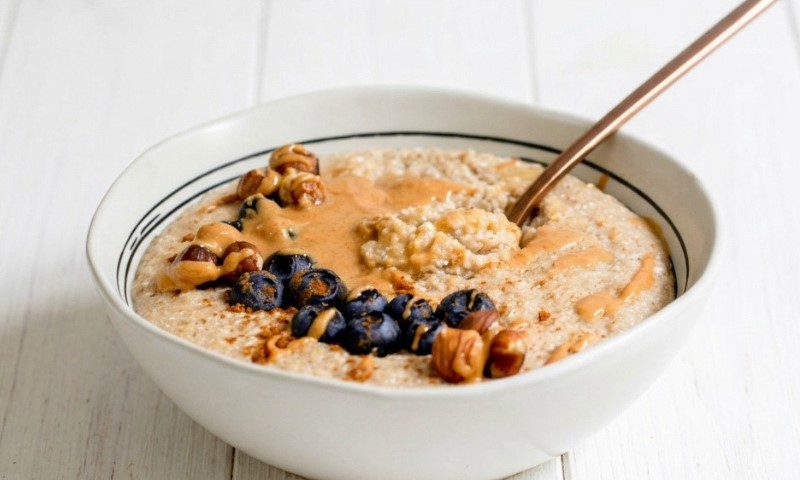
Oats are a helpful example. They contain both soluble and insoluble fiber, but they are especially known for soluble beta-glucan.
Foods higher in soluble fiber include oats, oat bran, barley, beans, lentils, chickpeas, split peas, apples, citrus fruits, carrots, sweet potatoes, flaxseed, chia seeds, and psyllium husk.
Foods higher in insoluble fiber include wheat bran, whole-grain wheat breads and cereals, brown rice, nuts, seeds, leafy greens, cauliflower, green beans, potatoes with skin, fruit peels, and vegetable stalks or skins.
Health Benefits of Getting Enough Fiber
Enough fiber can support better digestion and more regular bowel movements. Fiber increases stool weight and size, softens stool, and can make stool easier to pass. As a result, a higher-fiber eating pattern can lower the chance of constipation.
A high-fiber diet can also support bowel health. Higher fiber intake may lower the risk of hemorrhoids. It may also help lower the risk of inflammation linked to colon pouches and has been linked with a lower risk of colorectal cancer.
Fiber can support heart health, especially soluble fiber. Soluble fiber in foods such as beans, oats, flaxseed, and oat bran may reduce the absorption of some cholesterol in the digestive tract.
As a result, it may help lower LDL cholesterol, often called bad cholesterol.
Fiber can also help with blood sugar control. Soluble fiber can slow sugar absorption, which may support steadier blood sugar after meals.
An eating pattern that includes both soluble and insoluble fiber may also lower the risk of type 2 diabetes.
High-fiber foods can increase fullness, which may support healthy weight management. Foods high in fiber tend to be more filling.
They often take longer to eat and are usually less energy-dense, meaning they provide fewer calories for the same volume of food.
Some soluble fibers also support gut microbiome health. Certain soluble fibers are fermented by gut microbes and act as prebiotics, helping nourish beneficial bacteria.
Higher fiber intake is also linked with a lower risk of death due to any health condition, including heart disease. For that reason, fiber should be viewed as more than a nutrient for digestion.
How Much Fiber Do You Need?

Recommendations are usually given for total fiber, not separate soluble and insoluble fiber targets.
General adult fiber targets are:
| Group | Recommended Daily Fiber Intake |
|---|---|
| Women age 50 or younger | 25 grams |
| Women older than 50 | 21 grams |
| Men age 50 or younger | 38 grams |
| Men older than 50 | 30 grams |
A practical general target often falls around 25 to 30 grams per day, with needs varying by age and sex.
No official dietary intake target exists specifically for soluble fiber or insoluble fiber. Some experts suggest about 6 to 8 grams per day of soluble fiber, but most people do not need to count each type separately.
An easier approach is to eat a mix of fruits, vegetables, legumes, whole grains, nuts, and seeds. A varied plant-based mix naturally supplies both soluble and insoluble fiber.
How to Add More Fiber Safely
@cookingforpeanuts 🔟 EASY WAYS TO GET 🔟 GRAMS FIBER AT BREAKFAST. We need about 30 grams fiber per day so aim for about 10 grams with each meal! Let’s start with breakfast! 10 GRAMS ⬇️ 📌2 kiwis + 1 tbsp chia seeds 📌1/2 avocado + 1 tbsp flaxseed meal 📌1 cup raspberries + 1 tbsp flaxseed meal 📌2 tbsp chia seeds + 1 kiwi 📌1/4 cup dry steel cut oats + 1/4 cup pumpkin seeds + 1/2 cup raspberries 📌1/4 cup red lentils + 1/4 cup dried steel cut oats 📌1/4 cup dried lentils (cooked) in a smoothie with 1/2 cup raspberries 📌1/4 cup dried oats + 1 tbsp chia seeds + 1 tbsp flaxseed meal 📌smoothie with 1/2 avocado + 1/4 cup dried lentils (cooked) 📌1/2 avocado + about 2/3 cup raspberries 🥰See my savory oatmeal recipe and lentil smoothie recipe on my website! 🥰You got this! Love, Nisha Xxx REGISTERED DIETITIAN for over 20 years! #fiber #breakfast #healthybreakfast #registereddietitian #nutrition
Increase fiber gradually to reduce gas, bloating, and cramping. Adding too much fiber too quickly can make digestion uncomfortable. A slower increase over a few weeks gives natural gut bacteria time to adjust.
Drink enough water as fiber intake rises. Fiber works best when it absorbs water, which helps make stool soft, bulky, and easier to pass.
Practical ways to add more fiber include:
- Choose breakfast cereals with 5 grams or more of fiber per portion.
- Choose breads with at least 2 grams of fiber per slice.
- Make at least half of daily grains whole grains.
Choose whole grains such as brown rice, wild rice, buckwheat, whole-wheat pasta, quinoa, barley, bulgur, and whole-wheat bread or pasta.
Add beans, peas, or lentils to soups, salads, and everyday meals.
Eat five or more portions of fruits and vegetables daily.
Keep edible skins on fruits and vegetables when appropriate to increase insoluble fiber intake.
Snack on whole fruits, raw vegetables, unsalted low-fat popcorn, whole-grain crackers, nuts, or dried fruits without added sugar.
Whole foods are generally preferred over fiber supplements because whole foods also provide vitamins, minerals, and other beneficial nutrients.
Summary
Soluble fiber dissolves in water and forms a gel. It can help with cholesterol, blood sugar, fullness, and gut bacteria.
Insoluble fiber does not dissolve in water. It helps add bulk to stool and supports regular bowel movements.
Most fiber-packed plant foods contain a combination of both types. A healthy diet should include a variety of fiber-packed foods instead of focusing on only one type.