
Safe oven temperature depends on the collection, lid type, handle material, and cooking surface.
Stainless steel All-Clad cookware can usually handle higher oven heat than nonstick All-Clad cookware, which has a lower heat limit because of its coating.
Stainless steel is generally oven-friendly because it has strong heat resistance and performs well for stove-to-oven recipes.
Still, checking the product manual before using any All-Clad pan at high oven temperatures is always a smart step, especially if the cookware has a lid or non-metal handle.
Is All-Clad Oven-Safe?
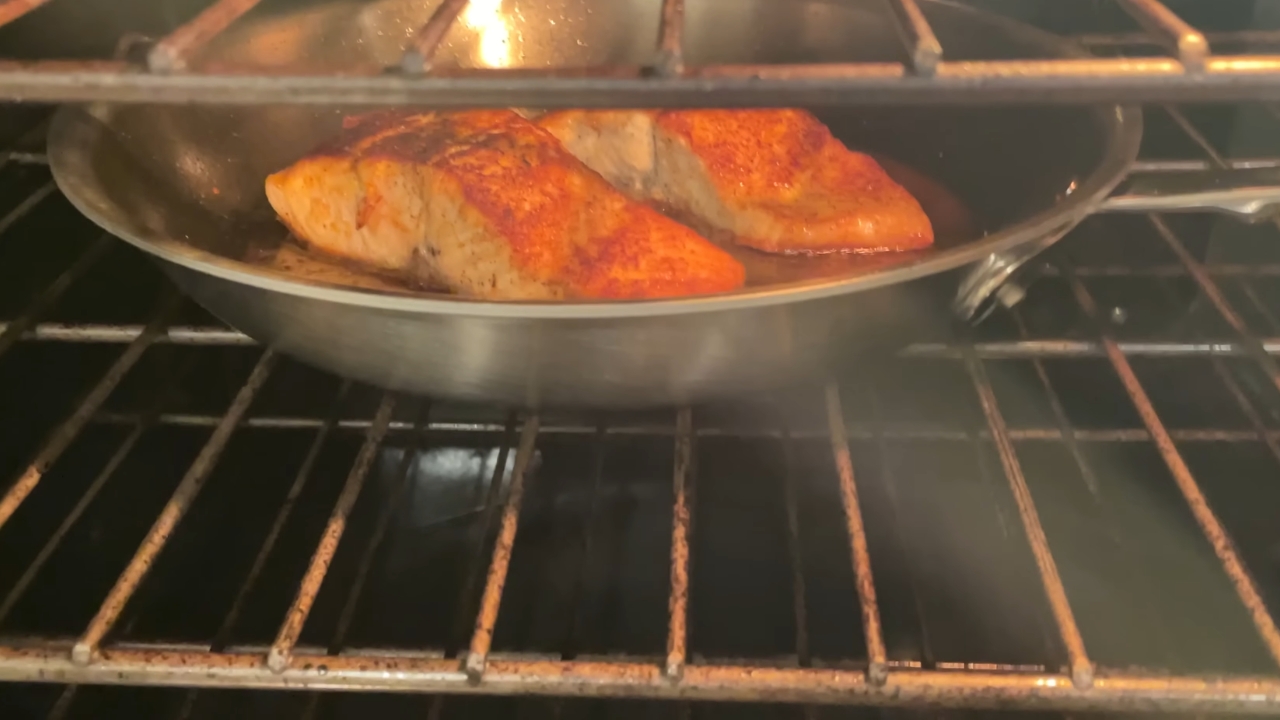
Yes, most All-Clad cookware can go in the oven, especially stainless steel pieces. Oven safety depends on the collection, cooking surface, lid, and handle materials.
Most All-Clad stainless steel cookware is built for high-heat cooking, so it works well for recipes that start on a stovetop and finish in an oven.
Popular stainless steel collections, including D3, D5, and Copper Core, are generally oven-safe up to 600°F / 315°C. Those stainless steel collections are also broiler-safe.
All-Clad nonstick cookware has different limits because nonstick coatings can be damaged by excessive heat. HA1 nonstick cookware is usually oven-safe up to 500°F / 260°C, but it should not go under a broiler.
All-Clad stainless cookware uses cladded construction. Stainless steel is bonded with heat-conductive metals like aluminum or copper to help heat spread across the pan more evenly.
High-quality cladded stainless steel is better suited for oven cooking than lower-quality stainless steel cookware because it heats more evenly and holds up better under high oven temperatures.
That matters for foods that need steady heat, such as roasted meats, baked pasta, cornbread, and skillet vegetables.
All-Clad Oven-Safe Temperatures
All-Clad Collection
Max Oven Temp
Broiler-Safe?
Key Detail
D3 Stainless Steel
600°F / 315°C
Yes
Tri-ply construction with an aluminum core, stainless interior, and magnetic stainless exterior
D5 Stainless Steel
600°F / 315°C
Yes
Five-ply construction with stainless steel and aluminum layers
Copper Core
600°F / 315°C
Yes
Five-layer construction with aluminum layers and a copper core
HA1 Nonstick
500°F / 260°C
No
Hard-anodized aluminum with a nonstick cooking surface
D3 Stainless Steel is a strong choice for oven use because its tri-ply construction helps reduce hot spots. Aluminum inside the pan supports even heat retention, while stainless steel provides durability and oven-safe performance.
D5 Stainless Steel adds more layers than D3. Its five-ply construction uses stainless steel and aluminum layers to support steady heat control. That can be helpful when a dish needs slower, more even cooking in an oven.
Copper Core is also oven-safe up to 600°F / 315°C and broiler-safe. Its copper center layer improves heat transfer, which helps the pan respond quickly to temperature changes.
HA1 nonstick cookware has a lower oven limit because of its nonstick cooking surface. A 500°F / 260°C limit still covers many everyday oven recipes, but high broiler heat can damage the coating.
- D3 works well for seared chicken, pork chops, skillet potatoes, and baked pasta.
- D5 fits recipes that benefit from more controlled heating, such as braised meat or thicker cuts.
- Copper Core is useful for recipes needing quick heat response, such as delicate proteins or sauces finished in an oven.
- HA1 works for moderate-heat baking, reheating, and finishing foods, but not broiling.
Can All-Clad Lids Go in the Oven?
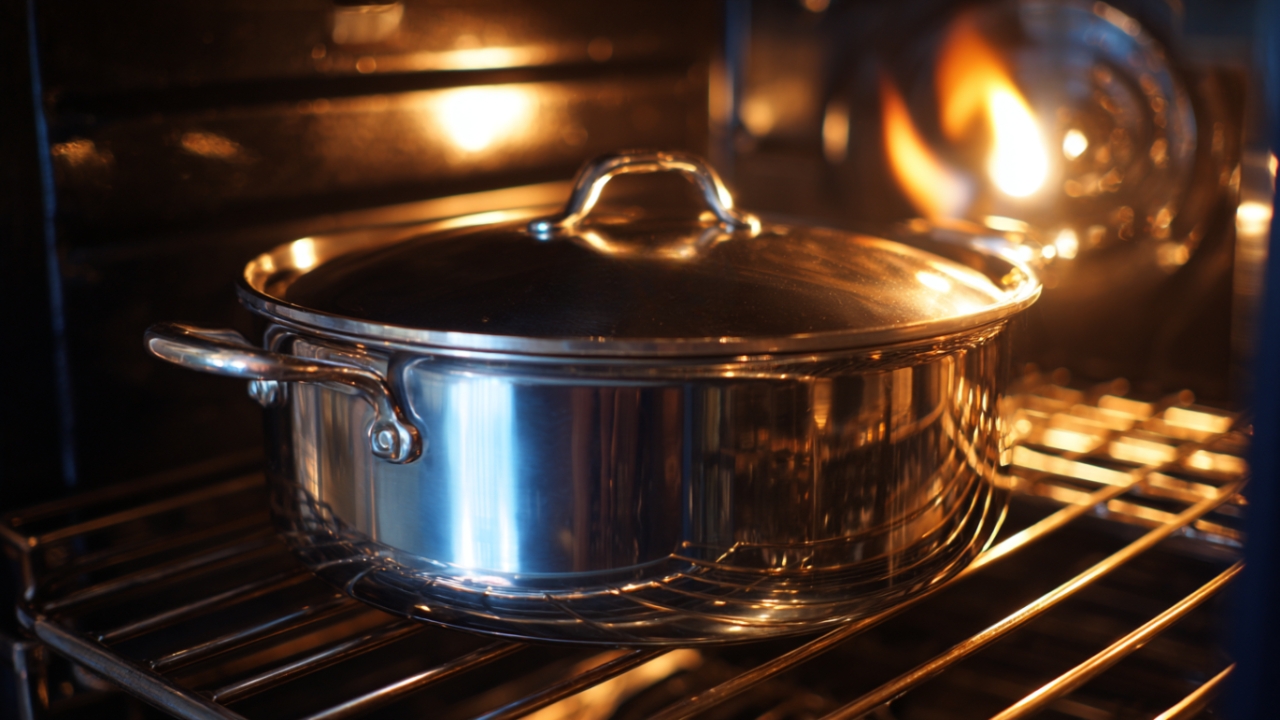
Do not assume a lid is oven-safe just because the pan is oven-safe. Pan bodies and lids can be made with different materials, and those materials may have different heat limits.
All-Clad stainless steel lids and glass lids that come with nonstick cookware are not considered safe for oven use. Glass, knobs, rim materials, and other lid parts may not tolerate the same heat as a stainless steel pan body.
Lid safety should always be confirmed in the manufacturer’s manual before oven use. Product details can vary by collection and by lid design.
- Remove the lid before placing the pan in the oven.
- Use aluminum foil as a temporary cover.
- Choose an oven-safe baking sheet as a loose cover when appropriate.
- Keep lids away from the broiler heat unless the manufacturer clearly allows it.
A lid can trap moisture during stovetop cooking, but oven cooking often works without it. For roasting, browning, crisping, or reducing liquid, leaving the lid off may actually give better results.
Important Safety Tips
View this post on Instagram
Always use oven mitts because handles get hot in an oven. Handles that feel cooler on a stovetop can become very hot during baking, roasting, or broiling.
Avoid putting nonstick pans under a broiler. Broiler heat is intense and can exceed safe limits for nonstick coatings. HA1 may handle oven temperatures up to 500°F / 260°C, but broiler use is not recommended.
Check handle materials before baking. Stainless steel handles are generally better suited for oven use, while plastic, rubber, silicone, or wooden handles may not be oven-safe at high temperatures.
- Let a hot pan cool before washing.
- Avoid rinsing a hot pan with cold water.
- Do not place a hot pan on a cold stone countertop without protection.
- Use a trivet, cooling rack, or dry towel under hot cookware.
- Avoid moving cookware directly between extreme temperatures.
Use low to medium heat on a stovetop before moving stainless steel cookware into an oven. All-Clad stainless steel is highly heat-capable in an oven, but high stovetop heat can increase sticking, discoloration, or burnt oil residue.
Cleaning also affects long-term performance. Hand washing is preferred for best results, especially with nonstick cookware. Nonstick surfaces should be cleaned with mild soap and a soft cloth or soft brush instead of steel wool.
Stainless steel can usually handle firmer cleaning than nonstick, but gentle cleaning still helps preserve the finish. For stuck-on food, soaking the pan in warm, soapy water can make cleanup easier.
Best Uses for All-Clad in the Oven
All-Clad cookware is especially useful for stove-to-oven recipes. A pan can sear food on a burner, then finish cooking in an oven without needing a separate baking dish.
Several dishes work especially well in oven-safe All-Clad cookware:
Oven Use
Why It Works Well
Steak seared on a stovetop, then finished in an oven
Helps build a browned crust first, then cooks the center more evenly.
Chicken thighs or chicken breasts cooked with a crisp exterior
Supports stovetop browning before oven finishing.
Frittatas started on a burner and finished when set
Allows the bottom to start cooking first, then lets the oven set the top.
Baked pasta with sauce and cheese
Let the sauce heat evenly while the cheese melts and browns.
Skillet cornbread with a golden crust
A hot pan helps create a crisp, browned edge.
Dutch babies that need a hot pan for lift
Preheated cookware helps the batter puff properly.
Roasted vegetables cooked in a stainless steel skillet
Even heat supports browning and tender centers.
Braised meats are cooked slowly in stainless steel cookware
Allows searing first, then slow oven cooking in the same pan.
Braising meats in stainless steel All-Clad cookware is a practical use because stainless steel can handle searing and oven cooking in one pan. After browning meat, liquid can be added, then the pan can go into an oven for slower cooking.
Stainless steel cookware is also helpful because it distributes heat evenly. Even heating can reduce hot spots, support better browning, and cut down on extra dishes.
Nonstick All-Clad cookware can still be useful in an oven, especially at moderate temperatures. HA1 works for everyday foods that do not need broiler heat, such as baked egg dishes, reheated casseroles, or gentle oven finishing.
Summary
@360cookware Replying to @Melz Bellz Can stainless steel go in the oven? YES! Our stainless steel cookware and bakeware are oven-safe up to 500° F, making them incredibly versatile for all of your cooking needs. #StainlessSteel #StainlessSteelCookware #360Cookware ♬ original sound – 360Cookware
Most All-Clad cookware can go in the oven, especially stainless steel pieces.
Stainless steel All-Clad collections like D3, D5, and Copper Core are typically safe up to 600°F / 315°C. HA1 nonstick is usually safe up to 500°F / 260°C.
Check each collection’s temperature limit, avoid broiling nonstick pans, remove questionable lids, and handle hot cookware carefully.