
Cooked pasta can stay in the fridge for 3 to 4 days when it is refrigerated within two hours of cooking and kept at 40°F (4°C) or colder. If you know you will not eat it within that period, freezing it is a better choice.
The same basic rule applies to plain spaghetti, penne, fusilli, macaroni, and most other cooked pasta. Pasta mixed with sauce also normally falls under the 3 to 4 day rule for cooked leftovers, although ingredients in the sauce can affect how well the dish keeps its texture and flavor.
The clock starts after cooking, not when you finally remember the container at the back of the refrigerator. Pasta cooked on Monday should generally be eaten or frozen by Thursday or Friday.
Type of Pasta
Fridge Time
Best Storage Method
Plain cooked pasta
3 to 4 days
Covered container at 40°F (4°C) or below
Pasta with tomato sauce
3 to 4 days
Covered container at 40°F (4°C) or below
Pasta with meat sauce
3 to 4 days
Covered container at 40°F (4°C) or below
Pasta with cream or cheese sauce
3 to 4 days
Covered container at 40°F (4°C) or below
Pasta salad
3 to 4 days
Keep continuously refrigerated
Put Cooked Pasta in the Fridge Within Two Hours
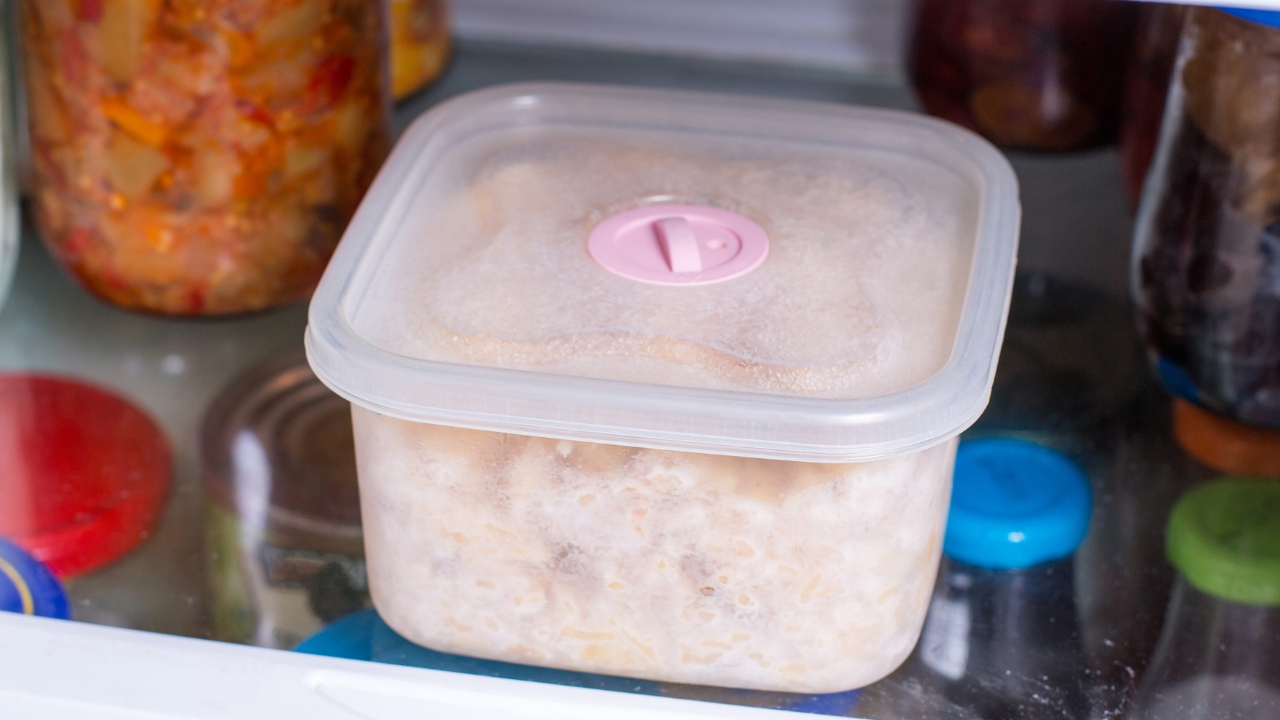
Storage time is only part of the answer. What happens before the pasta reaches the refrigerator matters just as much.
Cooked pasta should be refrigerated within two hours of cooking or serving. If the food is outside in temperatures above 90°F (32°C), that period drops to one hour.
A pot of pasta left on the counter for four or five hours should not be moved to the refrigerator and treated as fresh leftovers. Refrigeration cannot reverse the time the food has already spent at a temperature where bacteria can multiply.
You Do Not Need to Wait Until Pasta Is Completely Cold
Leaving cooked pasta on the counter until it reaches room temperature can easily turn a short cooling period into several hours.
Pasta can go into the refrigerator before it becomes completely cold. For a large batch, transfer it from a deep cooking pot into one or more shallow containers. A thinner layer releases heat more efficiently than a large mass of food packed into a deep container.
FoodSafety.gov also states that hot food can be placed directly into the refrigerator and recommends dividing large quantities into smaller portions to help them cool evenly.
How to Store Cooked Pasta Properly?
Good storage protects both food safety and texture. Pasta that is left uncovered dries out, absorbs refrigerator odors, and develops a tougher surface.
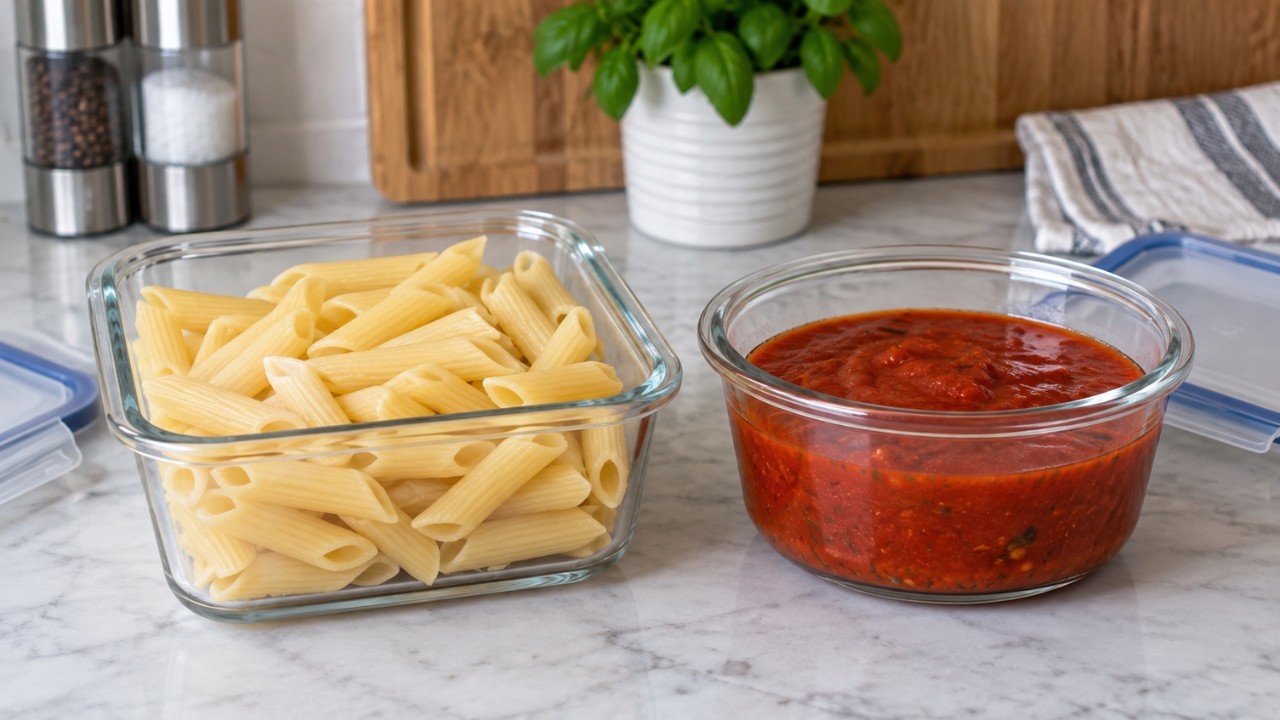
A large pot filled with pasta can remain warm in the center for much longer than a shallow container. Dividing a family-sized batch into two or three containers helps the food cool more evenly. The same approach works well for meal prep. Instead of repeatedly opening one large container throughout the week, portion the pasta when you store it. Most cooked pasta dishes should still be treated as leftovers and used within 3 to 4 days. Tomato sauce, meat sauce, cheese sauce, pesto, and cream-based sauces change the texture and flavor of stored pasta, but they do not give the dish permission to remain in the refrigerator for a week. Pasta with tomato sauce generally stores well for 3 to 4 days. The noodles continue absorbing moisture from the sauce, so they are usually softer when reheated than they were immediately after cooking. Keeping a small amount of extra sauce separately can help when reheating because it restores some moisture to the pasta. Spaghetti Bolognese, baked pasta with ground beef, and similar dishes should also be eaten within 3 to 4 days when continuously refrigerated. Do not give the pasta a longer storage period just because the meat was thoroughly cooked. Cooked meat and cooked pasta are both perishable leftovers. Alfredo, macaroni and cheese, and other creamy pasta dishes fit the same 3 to 4 day refrigerator window. The main problem after storage is often texture. Cream and cheese sauces may thicken, separate, or become oily during reheating. Gentle heat and a small amount of milk or water can help loosen the sauce. Discard pasta if you notice visible mold, an unpleasant sour odor, unusual discoloration, or a noticeably slimy surface. Texture changes alone need some context. Refrigerated pasta naturally becomes firmer as it cools, and pasta in sauce can become softer as it absorbs liquid. Neither change automatically means the food is spoiled. Do not use smell and appearance to extend the storage period. Pasta that has spent five or six days in the refrigerator should not be eaten simply because it still smells normal. Foodborne bacteria do not always create a smell, color change, or visible warning sign. Five day old cooked pasta is outside the USDA-recommended 3- to 4 day refrigerator period. The safer choice is to discard it. Trying a bite is not a useful safety test. Tasting food cannot reliably tell you if harmful bacteria are present, and taking a small bite still means eating the food you are trying to test. If you regularly end up with pasta that reaches day five, freeze part of the batch earlier instead of keeping everything in the refrigerator. Yes. Properly refrigerated pasta can be eaten cold without reheating. Cold pasta works particularly well in pasta salads and meal prep dishes. Safety depends on how the pasta was handled before refrigeration. Pasta that went into the refrigerator within two hours and remained at 40°F (4°C) or below is very different from pasta that sat on the table all afternoon before being chilled. If leftovers are reheated, FoodSafety.gov recommends heating them to 165°F (74°C). Place one portion in a microwave-safe container and add a small amount of water or sauce. Cover loosely so steam can circulate without sealing the container completely. Heat the pasta in shorter intervals and stir between them. Stirring matters because microwaves can leave cooler areas in the center of the food. A pan works particularly well for pasta with sauce. Add the pasta with a spoonful or two of water, sauce, or milk, depending on the recipe. Heat over moderate heat and stir until the pasta is hot throughout. Adding a little liquid prevents the sauce from becoming excessively thick as the noodles warm. Plain refrigerated pasta can be placed in hot or boiling water for a short period, just long enough to heat it through. Drain it as soon as it is hot so the noodles do not continue cooking and become too soft. Repeated heating and cooling makes storage harder to control and usually damages the texture. A better system is to remove only the portion you plan to eat and reheat that amount. Leave the rest of the pasta cold in the refrigerator. Meal prep becomes easier when pasta is stored in individual portions from the beginning. Yes. Freezing is useful when you have more pasta than you can eat within 3 to 4 days. Portion the pasta into freezer containers or freezer bags and freeze it before the refrigerator storage period runs out. FoodSafety.gov notes that frozen food kept continuously at 0°F (-18°C) remains safe indefinitely, although quality gradually declines during long storage. For ordinary leftovers, USDA guidance gives 3 to 4 months as a useful freezer period for quality. Freezing a large container creates another problem later because the entire batch has to be thawed when you only need one serving. Divide pasta into portions before freezing. Flattening pasta in freezer bags can also reduce storage space and help it thaw more evenly. Plain pasta and pasta with tomato or meat sauce generally tolerate freezing reasonably well. Delicate cream sauces may separate after freezing and thawing. Pasta itself may also become softer, especially if it was already fully cooked before freezing. If you regularly cook pasta for the freezer, leaving it slightly firmer during the first cooking can help preserve a better texture after reheating. Frozen pasta can be moved to the refrigerator and allowed to thaw gradually. Many sauced pasta dishes can also be reheated directly from frozen if the cooking method allows them to heat all the way evenly through. Do not thaw cooked pasta by leaving it on the kitchen counter for several hours. Refrigerator thawing keeps the food at a controlled temperature during the process. Discard it. Cooked pasta that remained at room temperature overnight has been outside the recommended two-hour limit for far too long. Putting it in the refrigerator the next morning does not make it safe again. The same rule applies even if the pasta looks dry, smells normal, or contains only olive oil and herbs. No. Olive oil may reduce sticking between plain noodles, but it does not extend the safe refrigerator storage period. Pasta with olive oil should still be refrigerated within two hours and used within 3 to 4 days. A small amount of oil can be useful when storing plain pasta separately from sauce, especially if the noodles will later be reheated or used in another dish. Food safety rules stay the same. Separate storage can help preserve texture if you know the meal will be eaten later. Pasta continues absorbing liquid while sitting in sauce. After two or three days, noodles that started al dente can become noticeably softer. Keeping sauce and pasta in separate containers allows you to heat them individually and combine them immediately before eating. The method is especially useful for creamy sauces, where controlling the reheating temperature can prevent separation. Cooked pasta lasts 3 to 4 days in the fridge. Refrigerate it within two hours of cooking, keep the refrigerator at 40°F (4°C) or colder, and store the pasta in a covered container. Pasta left out overnight should be discarded, and pasta that will not be eaten within four days should be frozen. A date written on the container removes the guesswork and makes it much easier to know when leftovers are still within the recommended storage period.
Shallow Containers Work Better for Large Batches
Does Pasta With Sauce Last as Long as Plain Pasta?
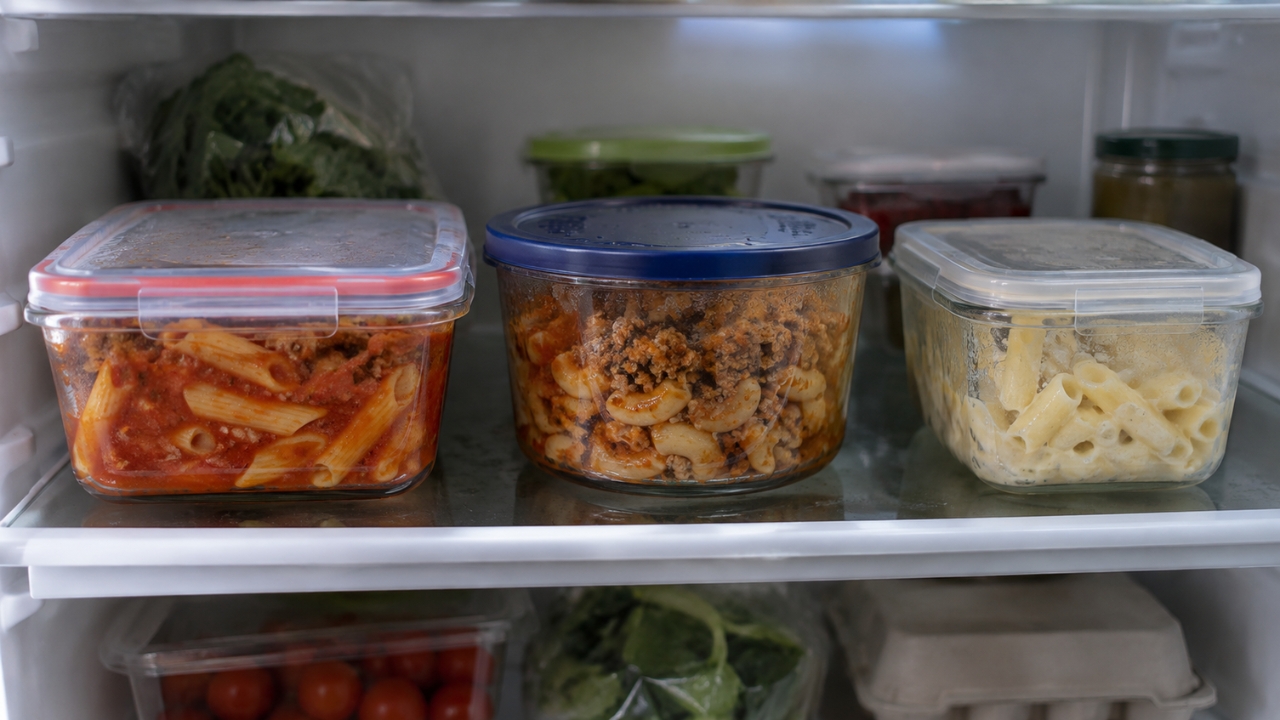
Pasta With Tomato Sauce
Pasta With Meat Sauce
Pasta With Cream Or Cheese Sauce
How Can You Tell If Cooked Pasta Has Gone Bad?
Is Cooked Pasta Still Good After 5 Days?
Can You Eat Cooked Pasta Cold From the Fridge?
How to Reheat Leftover Pasta?
Pasta can be reheated in a microwave, pan, or briefly in hot water. The best method depends on whether the pasta is plain or already mixed with sauce.Reheating Pasta in the Microwave
Reheating Pasta in a Pan
Reheating Plain Pasta in Hot Water
Can You Reheat Cooked Pasta More Than Once?
Can You Freeze Cooked Pasta?
Freeze Pasta in Meal-Sized Portions
Some Pasta Dishes Freeze Better Than Others
How to Thaw Frozen Cooked Pasta?
What If Cooked Pasta Was Left Out Overnight?
Does Adding Olive Oil Make Pasta Last Longer?
Should You Store Pasta And Sauce Separately?
Final Takeaway