
Plating is the intentional arrangement of food on a plate so that a dish looks attractive, organized, and ready to enjoy. Careful presentation shapes a diner’s first impression before a single bite is taken.
People often eat with their eyes first, so a meal that looks messy or careless may be judged before its flavor has a chance to speak.
Good plating can turn simple nourishment into a more artistic and memorable dining experience. A plate can work like a canvas, with ingredients placed carefully to create color, movement, balance, and focus.
Even a simple meal can feel more polished when the cook thinks about spacing, color, shape, and the role of each component.
Plating does not have to be limited to fine dining restaurants. Home cooks can use many of the same ideas in simple ways, such as wiping plate edges, choosing the right plate size, adding fresh color, and giving the main ingredient clear attention.
Small choices can make everyday dishes look more thoughtful and restaurant-quality.
What are the Basic Principles of Plating?
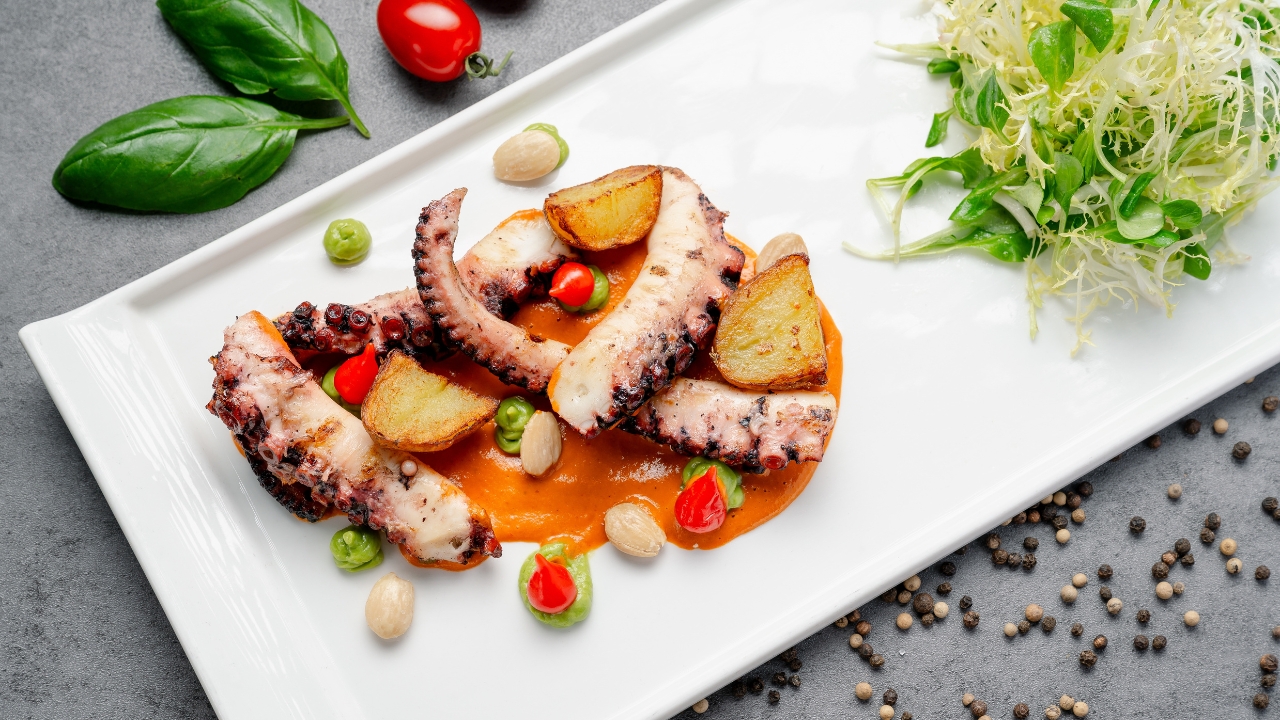
Good plating begins with balance. Every part of the dish should feel connected, including the main ingredient, sauce, garnish, side items, and open space on the plate. A plate feels stronger when flavor, color, texture, and shape support one another instead of competing for attention.
- A crisp topping can make a soft purée or tender protein more interesting.
- A bright sauce can lift heavier ingredients and make the dish feel fresher.
- A curved arrangement can soften sharp cuts or straight plating lines.
Color is another major part of a presentation. Bright greens, red sauces, golden roasted vegetables, purple cabbage, orange squash, and fresh herbs can help a dish look more lively.
Height can make a plate look more polished when used with control. Layering vegetables, leaning sliced protein against grains, or placing a garnish on top can add dimension. Food should still be easy to eat, so height should never make the plate unstable or awkward.
Controlled height works best when each layer has a clear job:
- Heavier ingredients should sit near the bottom for support.
- Fragile garnishes should be added last.
- Sauces should frame the food instead of weakening its structure.
Negative space means leaving open room around the food. Space helps the main components stand out and gives the plate a cleaner look. Crowding every inch can make even a good dish feel messy, so open space should be treated as part of the design.
Simplicity keeps attention on what matters most. A strong plate does not need many decorations or complicated patterns.
Most dishes look better when the cook chooses a clear focus, adds only useful supporting items, and removes anything that does not improve flavor, aroma, color, or texture.
A simple final check can help before serving:
- Can the main ingredient be identified right away?
- Does every garnish add something useful?
- Do sauces and sides support the dish instead of distracting attention?
Plating Techniques
Choosing the right plate size helps control how the food is perceived. A smaller portion on a very large plate can look empty, while too much food on a small plate can look crowded.
Smaller plates can make modest portions appear more refined and intentional when used with good spacing.
Placing the main ingredient as the focal point helps the diner immediately know what the dish is centered around. Protein, pasta, grains, or vegetables can be arranged so the eye moves naturally toward the main component first.
Supporting items should frame or complement that focus rather than compete with it.
- Put the largest item slightly off-center for a more natural composition.
- Angle-sliced proteins so the cut surface faces the diner.
- Keep side items close enough to feel connected to the main component.
Sauces and purées should be used with control. Squeeze bottles can help create precise dots, lines, curves, or small pools of sauce. A spoon can also be used to drag purées into smooth shapes. Sauces should look intentional rather than spilled or random.
Tweezers can help place delicate garnishes with care. Microgreens, herbs, edible flowers, and small vegetable pieces often look best when placed lightly and precisely. Careful placement gives a dish a clean and professional finish.
Ring molds and plate rings can create structure. They are useful for layered salads, rice, grains, tartares, or vegetable stacks. Ring molds also help keep portions consistent, which matters both at home and in restaurant kitchens.
Texture can be added through toasted nuts, fried shallots, crispy skin, grains, vegetables, sauces, and purées.
Herbs, flowers, zest, seeds, or greens should add flavor, aroma, color, or texture.
Decoration that does not match the dish can feel unnecessary and may distract attention away from the food. Purposeful garnishing becomes easier when each addition earns its place:
- Fresh herbs can add aroma right before serving.
- Citrus zest can brighten heavier dishes.
- Seeds or nuts can add crunch without changing the main structure.
Home Kitchen Skills and Fine Dining Presentation
View this post on Instagram
Home cooks can begin with simple improvements. Clean plates, proper plate size, colorful ingredients, open space, and neat arrangement can make everyday meals look more polished.
Pasta, roasted vegetables, grilled proteins, salads, and desserts are all good dishes for plating practice.
Trying different color combinations, textures, and arrangements allows home cooks to develop a personal plating style.
Small changes, such as placing sauce beneath the protein or adding herbs at the end, can make a meal feel more complete.
Fine dining plating requires close attention to detail while still moving at restaurant speed. Cooks must create plates that look beautiful while meeting the pace of service.
Speed matters, but precision matters just as much.
- Portion sizes need to match across every plate.
- Sauce placement needs to follow the same pattern.
- Garnishes need to sit in the same position each time.
Consistency is essential in fine dining. Each plate of the same dish should look nearly identical, with the same portion size, sauce placement, garnish position, and overall structure. Creativity may shape the dish at first, but repetition and discipline make it successful during service.
Common Mistakes to Avoid
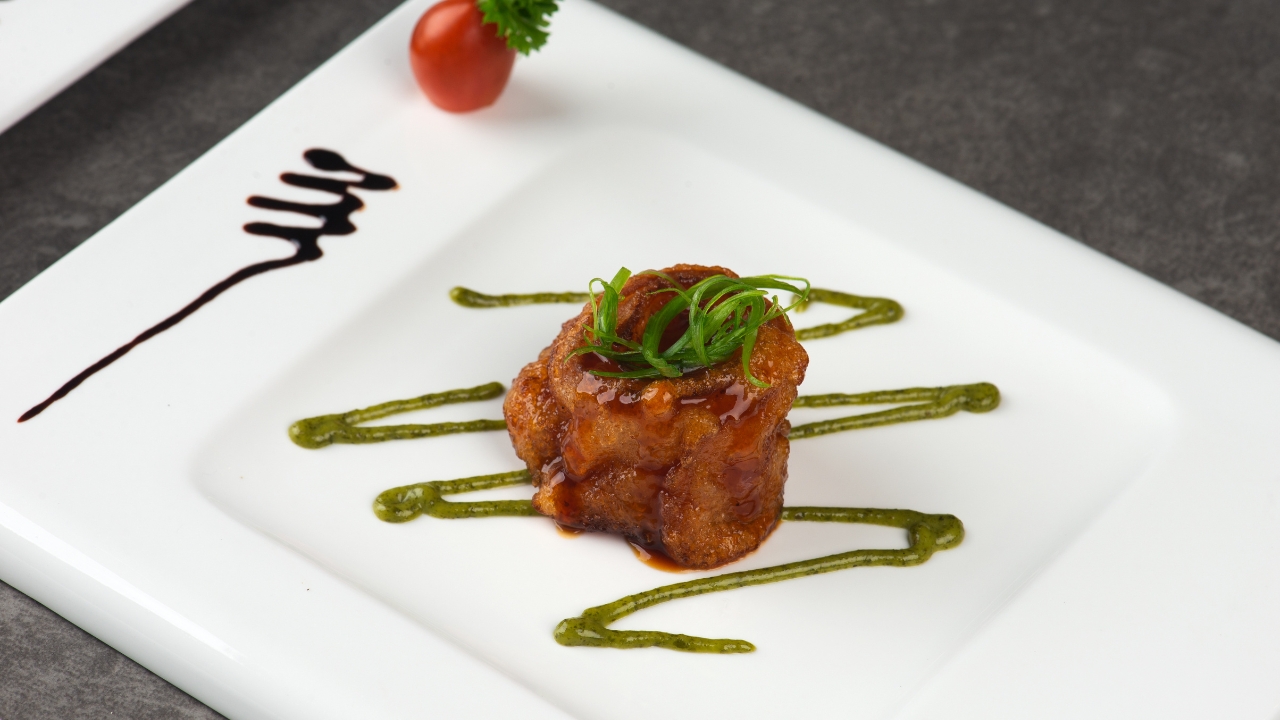
Overcrowding is one of the most common planting mistakes. Too many elements can make a plate look busy and unclear. A stronger approach is to choose fewer components and arrange them with care.
A garnish that does not match or improve the dish can feel out of place. Every added item should contribute flavor, aroma, color, or texture.
Sauces should look controlled. Random drips, uneven smears, or messy edges can make a plate feel careless.
Clean lines, smooth dots, and neat spoon work make sauces look more intentional.
- Thick sauces can clump if they are not loosened enough.
- Thin sauces can spread too far and weaken the design.
- Uneven spoon pressure can create rough streaks instead of smooth shapes.
Too much height can create problems. Tall stacks may look dramatic, but they can fall apart or make the dish difficult to eat. Height should add dimension without hurting comfort or stability.
Ignoring balance can weaken the entire presentation. Color, texture, shape, and flavor should work together. A dish with only soft textures or dull colors may taste good, but look unfinished.
Main ingredients should stay at the center of attention. Extra sauces, garnishes, and side items should support the main item. A diner should be able to look at the plate and quickly recognize the focus of the dish.
Summary
@iceculinary Plating Challenge: Chef Edition 🍽️🧑🍳👊💥 The technique might be dated, but who can master a classic? Are you Team Chef Nin, Remy, Barry, Barb, Herve or Jamie? Comment Below👇 #ICEculinary . . . . . #culinaryvoice #pastryschool #culinary #culinaryarts #culinaryschool #culinarystudent #culinaryexperience #chef #pastrychef #food #cook #cooking #learn #learntocook #beginner #basics #tutorial #lesson #teacher #student #skill #tips ♬ Funny video “Carmen Prelude” Arranging weakness(836530) – yo suzuki(akisai)
Plating is both a creative skill and a practical part of cooking. A good presentation helps food look more intentional, appetizing, and memorable.
Careful arrangement can make a simple meal feel more polished without changing the recipe itself.
Strong plating depends on balance, color, texture, height, spacing, simplicity, and purposeful garnishing. Each choice should support the dish rather than distract attention away from it.
With practice, home cooks can use professional plating ideas to improve everyday meals. Clean plates, smart spacing, colorful ingredients, controlled sauces, and thoughtful garnishes can help ordinary dishes look closer to restaurant quality.