
Red Chimichurri, known in Argentina as Chimichurri Rojo or Chimi Rojo, is a bold and flavorful sauce traditionally served with grilled meats, especially Argentinian asado (barbecue).
Unlike the more common green chimichurri, this version includes paprika, red pepper flakes, and tomato paste, giving it a deep red color and smoky flavor.
This versatile sauce works wonderfully as a steak topping, marinade, dipping sauce for grilled vegetables, or spread for sandwiches.
Its combination of garlic, vinegar, herbs, and spices brings brightness and richness to any grilled dish.
Let us see exactly how Argentinian Red Chimichurri is actually made.
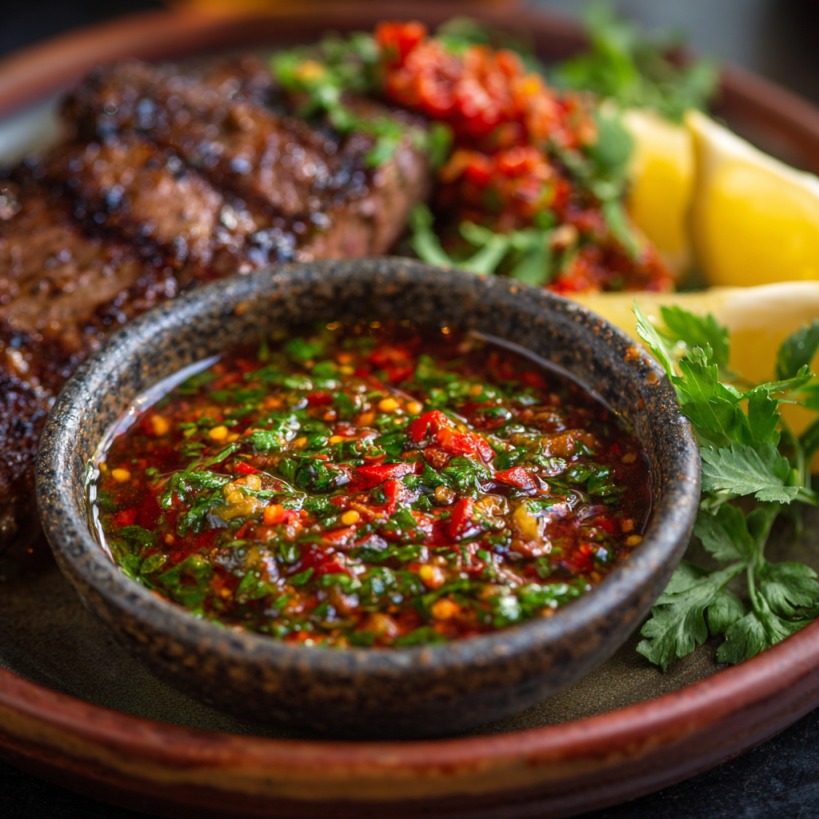
Argentinian Red Chimichurri (Chimi Rojo) Recipe
Ingredients
Equipment
Method
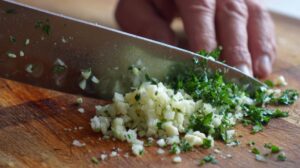
- Prepare the Garlic and Herbs: Finely mince the garlic cloves and chop the fresh parsley as finely as possible. This ensures the flavors distribute evenly throughout the sauce.Combine the Dry Ingredients: In a medium mixing bowl, add the dried oregano, smoked paprika, sweet paprika, red pepper flakes, salt, and black pepper.
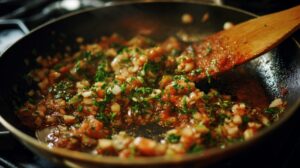
- Add the Flavor Base: Stir in the minced garlic, chopped parsley, and tomato paste. Mix until the ingredients form a thick paste.Incorporate the Liquids: Pour in the red wine vinegar and olive oil. Whisk or stir thoroughly until the mixture becomes smooth and well combined.
- Adjust Consistency: If the sauce appears too thick, add 1 tablespoon of warm water and mix again until the desired consistency is reached.Balance the Flavor: Taste the chimichurri and add a small pinch of sugar if needed to balance the acidity from the vinegar.

- Rest the Sauce: Let the chimichurri sit for 10–15 minutes before serving. This resting time allows the flavors to blend together.Serve or Store: Serve immediately over grilled meats or store in an airtight container in the refrigerator for up to 5 days.
Video
Notes
| Nutrient | Amount per Serving |
|---|---|
| Serving Size | ~35 g |
| Calories | 95 kcal |
| Carbohydrates | 2 g |
| Protein | 0.4 g |
| Fat | 10 g |
| Saturated Fat | 1.4 g |
| Polyunsaturated Fat | 1.2 g |
| Monounsaturated Fat | 7.1 g |
| Trans Fat | 0 g |
| Cholesterol | 0 mg |
| Sodium | 210 mg |
| Potassium | 45 mg |
| Fiber | 0.4 g |
| Sugar | 0.5 g |
| Vitamin A | 520 IU |
| Vitamin C | 2.5 mg |
| Calcium | 12 mg |
| Iron | 0.4 mg |
Cooking Tips
- Use quality olive oil: Since chimichurri is not cooked, good olive oil makes a noticeable difference in flavor.
- Let it rest: Allowing the sauce to sit helps the garlic and spices infuse into the oil.
- Adjust the heat: Add more red pepper flakes if you prefer a spicier chimichurri.
- Fresh vs dried herbs: Fresh parsley is traditional and provides the best flavor.
- Perfect pairing: Chimichurri rojo is excellent with grilled steak, chicken, lamb, sausages, roasted potatoes, and vegetables.
How About Alternative Ingredients?
If you don’t have all the traditional ingredients on hand, you can still make a delicious Red Chimichurri by using a few simple substitutions. Here are some great alternatives that work well while keeping the sauce flavorful and balanced:
| Ingredient | Possible Alternatives | Notes |
|---|---|---|
| Parsley | Fresh cilantro, fresh oregano, mixed herbs | Adds a slightly different herbal flavor while keeping the sauce fresh and vibrant. |
| Red Wine Vinegar | Apple cider vinegar, white wine vinegar, fresh lemon juice | Provides the acidity needed to balance the oil and spices. |
| Tomato Paste | Roasted red pepper puree, paprika paste, sun-dried tomato paste | Maintains the red color and adds depth of flavor. |
| Olive Oil | Avocado oil, grapeseed oil, mild vegetable oil | Use a neutral oil if olive oil is unavailable. |
| Red Pepper Flakes | Cayenne pepper, fresh chili, chili powder, Aleppo pepper | Adjust the amount depending on desired heat level. |
| Garlic | Garlic powder (½ tsp per clove) | A convenient substitute when fresh garlic is unavailable. |
Alternatives allow you to customize the sauce depending on what you have available, while still preserving the bold, tangy character that makes Argentinian chimichurri rojo so delicious.
What Would be the Best Food Pairings?
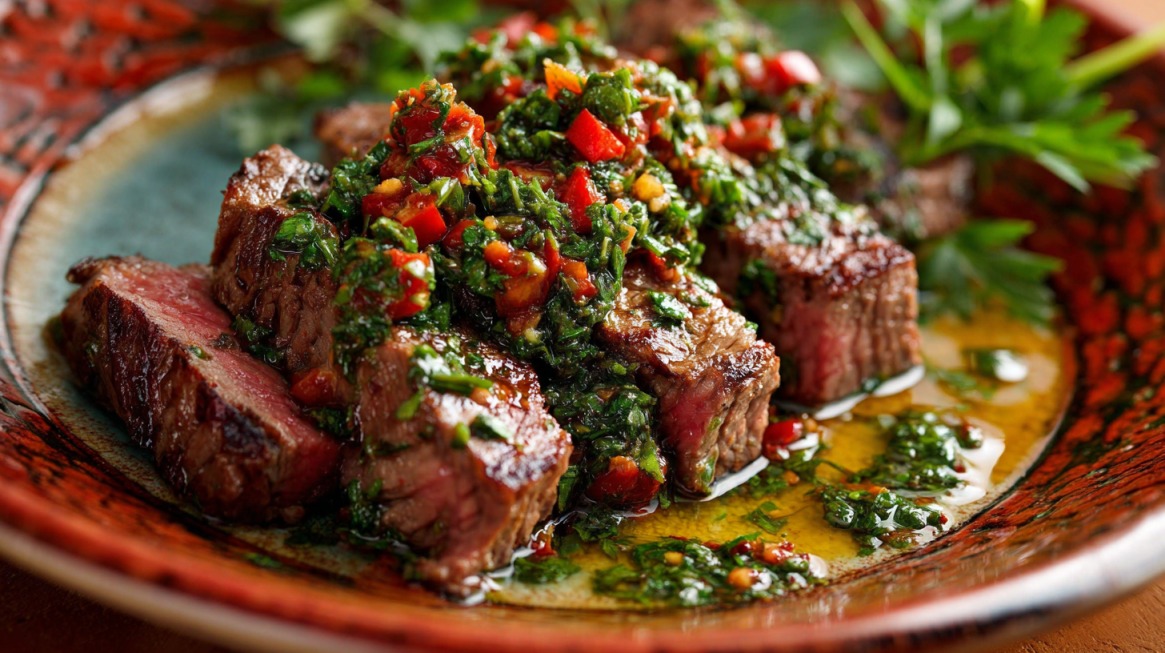
Authentic Argentinian Red Chimichurri (Chimi Rojo) is incredibly versatile and pairs beautifully with many grilled and roasted dishes.
Its bold combination of garlic, vinegar, olive oil, and spices makes it especially perfect for grilled meats.
Traditional Argentinian grilled steak, such as ribeye, skirt steak, flank steak, or sirloin, is one of the best pairings, as the rich meat flavors balance perfectly with the bright and slightly spicy sauce.
It also works wonderfully with grilled chicken, adding moisture and a flavorful kick to both chicken breasts and thighs. For seafood lovers, chimichurri rojo can elevate grilled shrimp, salmon, or white fish, giving them a smoky and tangy finish.
Vegetables benefit greatly from this sauce as well. Try it drizzled over grilled zucchini, roasted potatoes, eggplant, bell peppers, or mushrooms for a bold flavor boost. It can also be used as a marinade for meats and vegetables before grilling.
Chimichurri rojo also shines in casual meals. Spread it inside steak sandwiches, burgers, or wraps, or serve it as a dipping sauce with crusty bread, roasted potatoes, or grilled sausages (chorizo). Its vibrant taste instantly enhances simple dishes and brings a touch of authentic Argentinian barbecue flavor to the table.
Summary
Authentic Argentinian Red Chimichurri (Chimi Rojo) is a simple yet incredibly flavorful sauce that captures the bold spirit of Argentinian cuisine.
With its rich blend of garlic, olive oil, vinegar, herbs, and spices, it delivers the perfect balance of tangy, smoky, and slightly spicy flavors that enhance a wide variety of dishes.
One of the best things about this sauce is how quick and easy it is to prepare, while still offering restaurant-quality flavor.
Once you try homemade chimichurri rojo, it’s likely to become a staple condiment for barbecues, weeknight dinners, and gatherings with family and friends.