
Rice cakes are a popular snack and pantry staple found in many homes. Some are light and crisp, sold in sealed packages for long storage.
Others are soft and chewy, often sold fresh or vacuum sealed and meant to be eaten quickly. Shelf life depends heavily on the type of rice cake and how it is stored.
- Do rice cakes expire?
- What signs show they have gone bad?
- How should they be stored to keep them fresh as long as possible?
Clear answers depend on packaging, moisture level, and storage conditions.
Do Rice Cakes Have an Expiration Date?
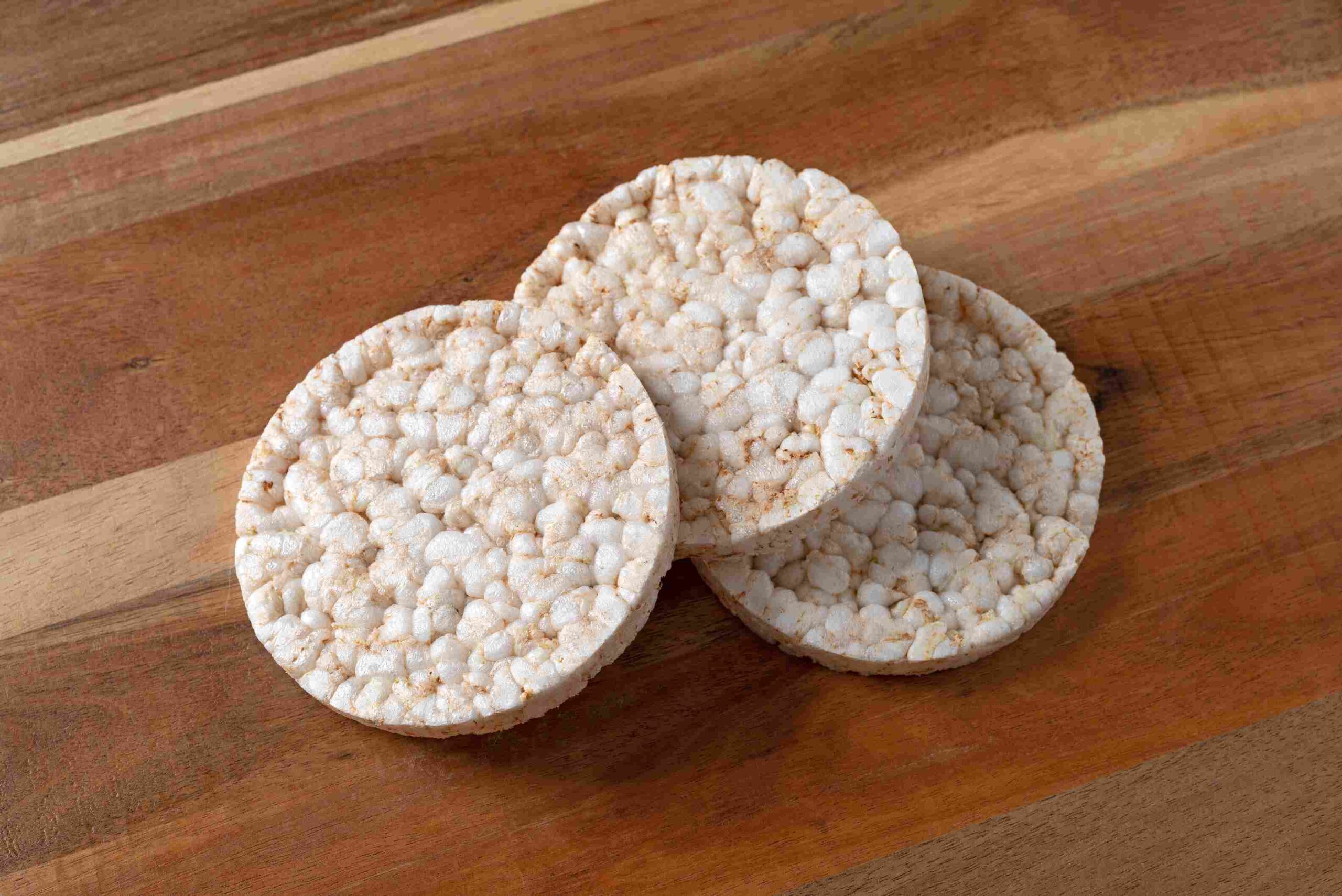
Puffed rice cakes, the common round snack variety, typically last 6 to 12 months when unopened and stored in a cool, dry pantry, but once opened, exposure to air and moisture causes them to lose crispness within 1 to 2 weeks.
Signs of spoilage differ between dry and fresh varieties, ranging from staleness to sour odors or mold. Proper storage in a cool, dry place or in the refrigerator or freezer when appropriate can significantly extend freshness.
Clear differences exist between unopened packages, opened packages, and fresh rice cakes.
If you are unsure how long dry baking staples last in your pantry, you can also read our detailed guide on does Bisquick go bad to understand better how best-by dates and storage affect shelf life.
Unopened Packaged
Puffed rice cakes, the common round snack variety, typically last 6 to 12 months when unopened and stored in a cool, dry pantry. Shelf life usually aligns with the best-by date printed on the package. That date refers to peak quality rather than strict food safety.
Many unopened packages remain safe to eat after the best-by date if appearance and smell remain normal.
Low moisture content helps puffed rice cakes stay stable for months. Proper storage away from heat and humidity plays a major role in preserving texture and taste.
Opened Packaged
Quality declines more quickly once a package is opened. Exposure to air and moisture causes puffed rice cakes to lose crispness within 1 to 2 weeks when stored in the pantry. Texture becomes stale and less enjoyable.
Improper sealing speeds up quality loss. Leaving the package loosely closed allows humidity to enter, softening the cakes. While they may still be safe if no mold or odor is present, texture and flavor often suffer noticeably.
What are the Signs Rice Cakes Have Gone Bad?
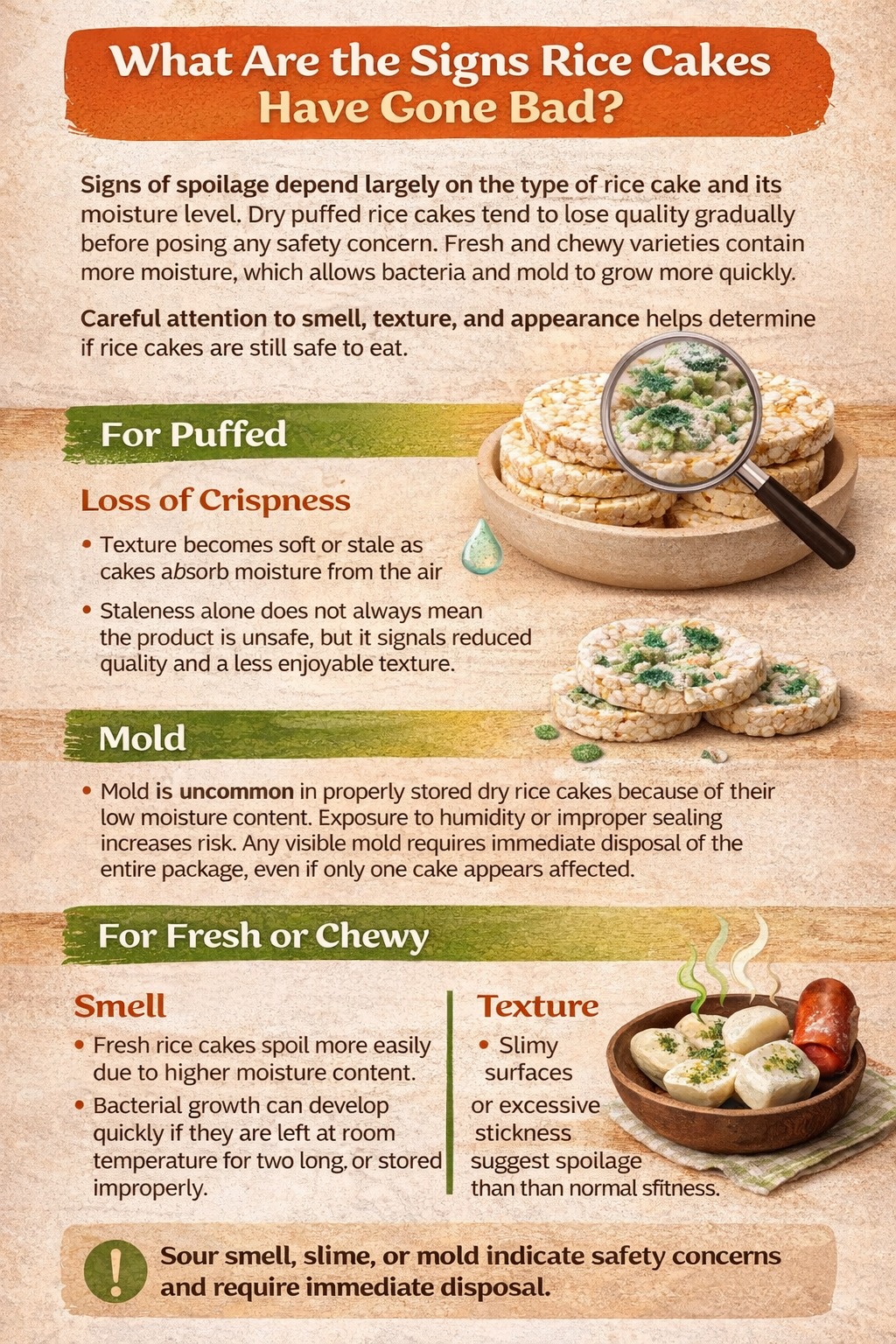
Signs of spoilage depend largely on the type of rice cake and its moisture level. Dry puffed rice cakes tend to lose quality gradually before posing any safety concern. Fresh and chewy varieties contain more moisture, which allows bacteria and mold to grow more quickly.
Careful attention to smell, texture, and appearance helps determine if rice cakes are still safe to eat.
For Puffed
Loss of crispness is one of the earliest and most noticeable changes. Texture becomes soft or stale as the cakes absorb moisture from the air.
Staleness alone does not always mean the product is unsafe, but it signals reduced quality and a less enjoyable texture.
Mold is uncommon in properly stored dry rice cakes because of their low moisture content. Exposure to humidity or improper sealing increases risk. Any visible mold requires immediate disposal of the entire package, even if only one cake appears affected.
For Fresh or Chewy
Fresh rice cakes spoil more easily due to higher moisture content. Bacterial growth can develop quickly if they are left at room temperature for too long or stored improperly.
Smell often provides the first indication of spoilage. Sour, fermented, or otherwise unpleasant odors point to bacterial activity and signal that the rice cakes should not be eaten.
Texture changes also offer important clues. Slimy surfaces or excessive stickiness suggest spoilage rather than normal softness.
Korean rice cakes, such as tteok, may lose chewiness and become firm or crumbly during refrigeration. Hardening alone often reflects starch changes and quality decline rather than spoilage. Sour smell, slime, or mold indicate safety concerns and require immediate disposal.
How to Store Rice Cakes to Keep Them Fresh
View this post on Instagram
Proper storage extends freshness and helps maintain texture. Storage method depends on the type of rice cake and how soon it will be consumed.
Storage for Puffed
Pantry storage works well for unopened packages. Cool, dry locations away from heat and humidity preserve crispness until the best-by date. Cabinets away from stoves and dishwashers offer more stable conditions.
After opening, careful sealing becomes essential.
- Reseal the original bag tightly after each use.
- Place the bag inside an airtight container for added protection.
- Keep the container in a low-humidity area of the pantry.
Limiting exposure to air and moisture helps maintain texture for up to 1 to 2 weeks.
Refrigeration and Freezing
Refrigeration is not usually necessary for puffed rice cakes and may reduce crunchiness due to moisture exposure. Fresh cakes benefit more significantly from refrigeration, which slows bacterial growth and spoilage.
Even under refrigeration, quality declines relatively quickly due to moisture migration and starch changes.
Freezing offers extended storage for both types.
- Puffed frozen for 3 to 6 months with possible texture changes after thawing.
- Fresh frozen for several months when tightly wrapped to prevent freezer burn.
@little_label_co How to store rice cakes…For tall packets use our 2.3L Flip Canister, and shorter packets (with wider thins) can fit in the 2L Bamboo Round Glass Jar. #littlelabelco #pantryorganisation #storagehack #ricethins #declutter #organisedhome #organisationtips #pantrygoals #storagesolutions ♬ original sound – little_label_co
Texture may shift after freezing, especially for fresh ones. Gentle reheating or steaming can help restore softness in chewy varieties after thawing.
Summary
Rice cakes do expire, though the timeline depends on the type. Puffed varieties mainly lose quality over months, while fresh varieties can spoil in a matter of days.
Proper storage in airtight containers and cool, dry conditions or refrigeration and freezing when appropriate greatly extends freshness.
Visual checks, smell, and texture offer reliable clues about safety. When any sour odor, mold, or unusual texture appears, discarding the rice cakes is the safest choice.