
Indian restaurant menus often present a common dilemma:
- Butter Chicken
- Chicken Korma
Both feature tender chicken in creamy, mildly spiced sauces, yet their flavors and ingredients differ in important ways.
Butter Chicken centers on a tomato, butter, and cream base with lightly charred meat, while Chicken Korma relies on yogurt, cream, and ground nuts with fragrant aromatics and slow braising.
Cravings, spice tolerance, and texture preferences can easily guide the decision.
A closer look at their origins, ingredients, and preparation methods makes the choice even clearer.
What are the Differences, Ingredient-wise?
Ingredient choices create the clearest contrast between Butter Chicken and Chicken Korma. Sauce base, spice structure, and type of dairy used all shape how each curry tastes and feels on the plate.
Butter Chicken relies on a tomato-based sauce enriched with butter and heavy cream. Tomatoes form the heart of the gravy, giving it a tangy sweetness that defines the dish. Cream and butter soften acidity and create a smooth finish.
- Tomato puree or crushed tomatoes as the primary base
- Butter and heavy cream for fullness and silkiness
- Garam masala, coriander, paprika, and Kashmiri chili for warmth and color
- Occasional yogurt in the marinade to tenderize the chicken
@stuffedchells Enjoying some Indian food 😋#indianfood #butterchicken #chickenkorma #eatwithme #foodontiktok #mukbang #mukbanger #fypp ♬ original sound – Chelsea V
Seasoning in Butter Chicken supports the tomato butter combination rather than overpowering it. The flavor profile tends to be well-rounded, with mild heat and a gentle sweetness.
Kashmiri chili contributes vibrant color more than intense spice.
On the other hand, Chicken Korma follows a different structure. Yogurt, heavy cream, and ground nuts such as almonds or cashews form its creamy base.
Traditional recipes generally avoid tomatoes, which keeps acidity softer and less pronounced.
- Plain yogurt as a braising medium
- Cashew or almond paste for thickness and body
- Cardamom, turmeric, and Kashmiri chili for fragrance and color
- Optional additions like poppy seeds or cinnamon for added aroma
How Do These Two Taste?
Taste differences become clear with the first bite. Sweetness, tang, nuttiness, and aromatic warmth each play different roles in these curries.
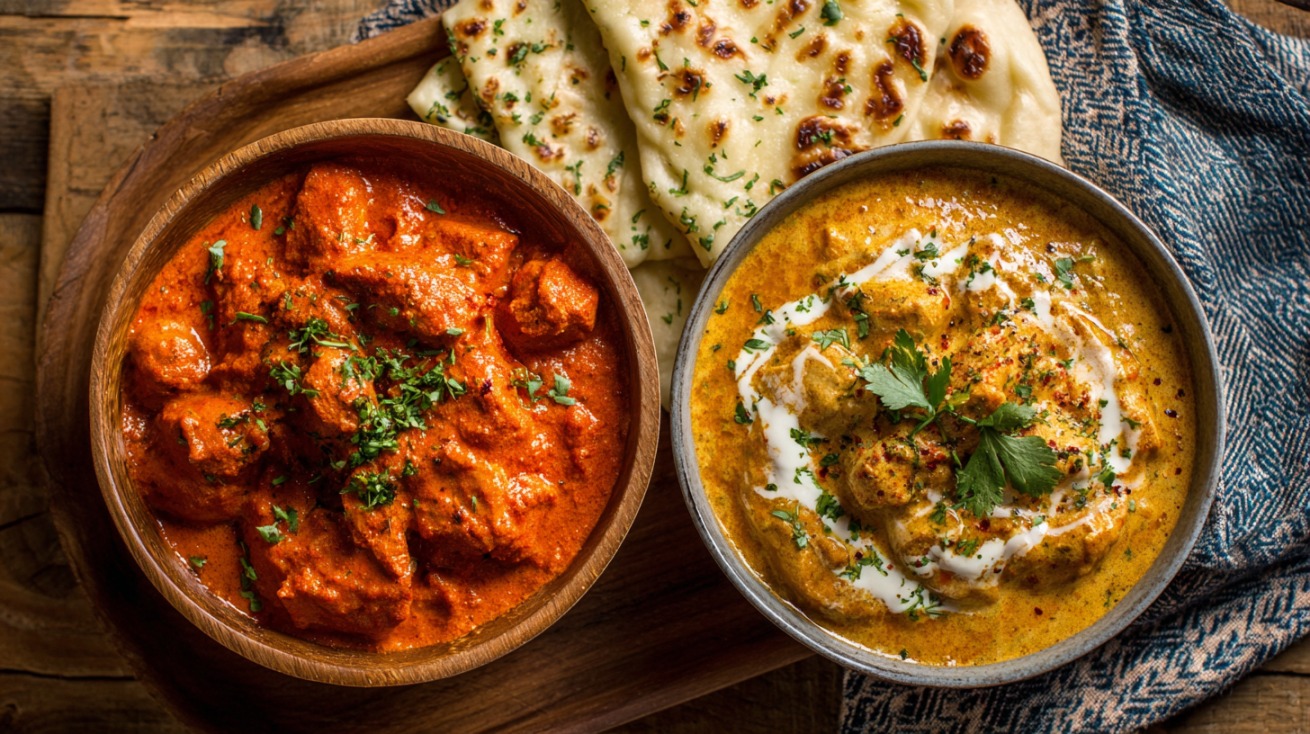
Butter Chicken
Butter Chicken tastes smooth and tomato-forward with a creamy, buttery base. Mild spice allows sweetness and tang to share center stage. Small amounts of sugar or honey are sometimes added to round out acidity.
- Tangy tomato balanced by cream
- Gentle sweetness layered into the sauce
- Mild heat that rarely dominates
- Subtle smokiness if tandoori chicken is used
Texture remains very smooth because the sauce is often blended or strained. Consistency feels uniform and glossy, making it ideal for scooping with naan or spooning over rice.
Chicken Korma
Chicken Korma tastes milder and more nutty than tangy. Yogurt contributes subtle acidity, while cardamom and other aromatics bring fragrant warmth. Spice level stays controlled, yet flavor complexity remains noticeable.
- Creamy nuttiness from ground almonds or cashews
- Light tang from yogurt rather than tomato
- Floral warmth from cardamom
- Soft earthiness from turmeric
Sauce tends to be thicker and sometimes slightly grainy due to caramelized onion paste and ground nuts or seeds. Texture clings closely to the chicken, giving each bite a substantial and comforting feel.
Preparation Differences
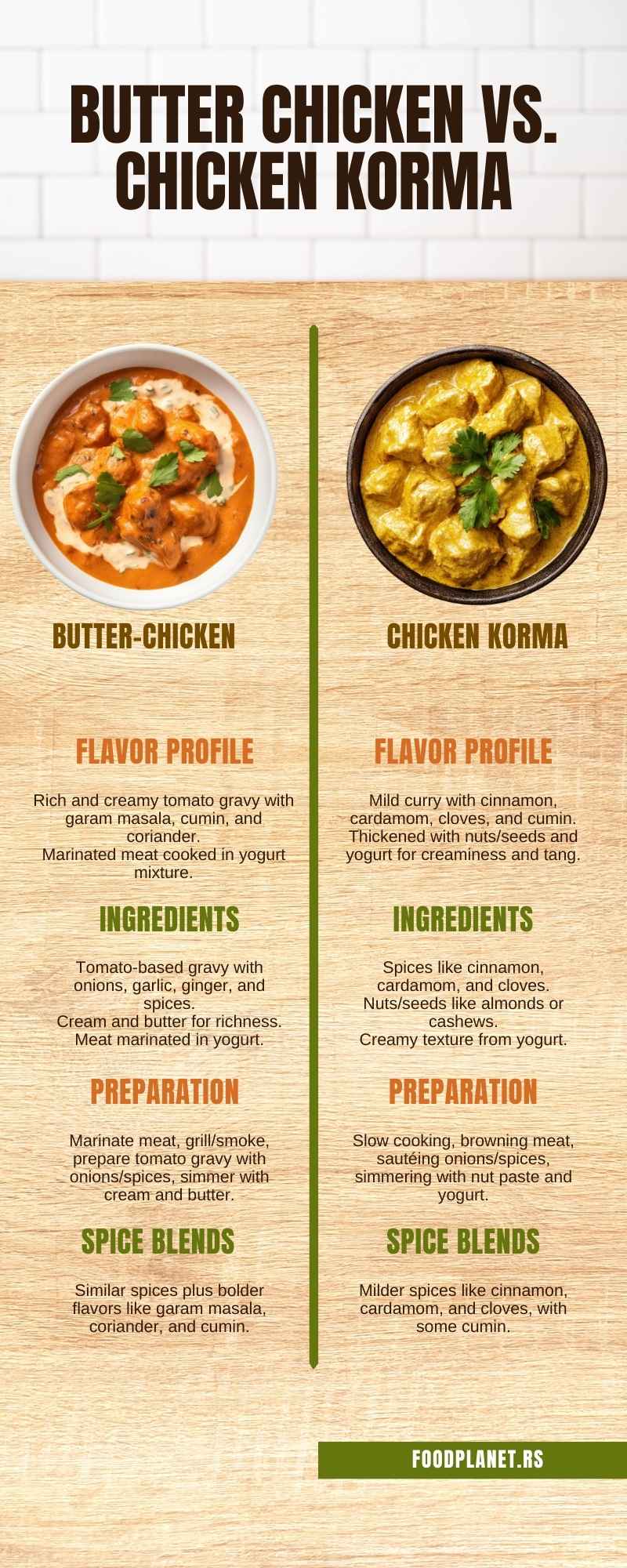
Cooking methods shape both taste and texture. The order of steps and heat techniques influences the final flavor significantly.
Butter Chicken begins with marinated chicken, often prepared in tandoori style. Yogurt and spices coat the meat before grilling or roasting. Initial high heat creates light charring and smoky notes.
Grilling adds depth that carries through the final dish. Simmering afterward allows the sauce to coat the chicken while preserving some roasted character.
Chicken Korma uses a slower braising approach. Raw or lightly seared chicken cooks directly in yogurt, onion, and nut sauce. Gradual simmering helps meat absorb aromatics evenly.
Steady cooking allows flavors to develop gradually. Final result lacks smoky notes but compensates with layered fragrance and integrated seasoning.
A Closer Look at Calories and Fat Content
| Category | Butter Chicken | Chicken Korma |
|---|---|---|
| Calories (Per Serving) | 400 to 600 calories. Many average 450 to 485 calories. | 300 to 400 calories per serving. |
| Total Fat | 20 to 35+ grams per serving. Higher saturated fat due to butter and cream. | Moderate fat level. About 10 grams per 100g in one dataset. More unsaturated fats from nuts. |
| Protein | Often 30 to 40 grams per serving. About 24 grams in one dataset. | Usually 20 to 30 grams per serving. About 13 grams per 100g in one dataset. |
| Main Fat Sources | Butter and heavy cream. | Yogurt and ground nuts such as almonds or cashews. |
| Micronutrients | Tomatoes provide some vitamin C and potassium. | Nuts provide minerals such as magnesium. |
| Lighter Option | Typically higher in calories and fat. | Generally lower in calories per serving. |
| Higher Protein Option | Often slightly higher protein. | Moderate protein, usually less than Butter Chicken. |
Ingredient makeup directly affects calories, fat levels, protein content, and overall nutritional value in each curry.
Diners focused on calorie control, higher protein intake, or lower saturated fat may notice meaningful differences between these two dishes.
View this post on Instagram
Calories and Macronutrients
Calorie comparisons show a clear pattern. Butter Chicken typically ranks higher in total calories per serving than Chicken Korma.
Standard restaurant or homemade portions of Butter Chicken usually fall between 400 and 600 calories per serving, with many averaging 450 to 485 calories. Fat content often ranges between 30 and 35 grams, while protein commonly lands between 30 and 40 grams, depending on portion size and preparation.
Chicken Korma generally comes in lower, at around 300 to 400 calories per serving, often with moderate fat and slightly less protein than Butter Chicken.
More specific database examples reinforce that difference. One dataset lists a typical Butter Chicken portion at 384 calories, 29 grams of fat, and 24 grams of protein.
Comparable data for Chicken Korma shows approximately 166 calories per 100 grams, with 13 grams of protein and 10 grams of fat in that serving size. Exact values vary by recipe, but overall patterns remain consistent.
Fat and Saturated Fat
Higher dairy content explains much of the calorie gap. Butter Chicken relies heavily on butter and cream, both of which raise total and saturated fat levels. Many servings contain 20 to 35 or more grams of total fat, with a significant portion coming from saturated fat.
Chicken Korma usually contains slightly less total fat per serving. Yogurt and ground nuts replace much of the butter used in Butter Chicken.
Nuts such as almonds or cashews supply monounsaturated and polyunsaturated fats, which are considered more favorable for heart health when eaten in moderation.
Protein
Both dishes offer substantial protein due to their chicken base. Butter Chicken often provides 30 to 40 grams of protein per serving in many preparations.
Korma generally provides 20 to 30 grams per serving, depending on the ratio of meat to sauce and the amount of yogurt used.
Protein content in both curries supports muscle maintenance and satiety. Pairing either dish with vegetables or whole grains can create a balanced and filling meal.
Where Do These Two Dishes Come From?
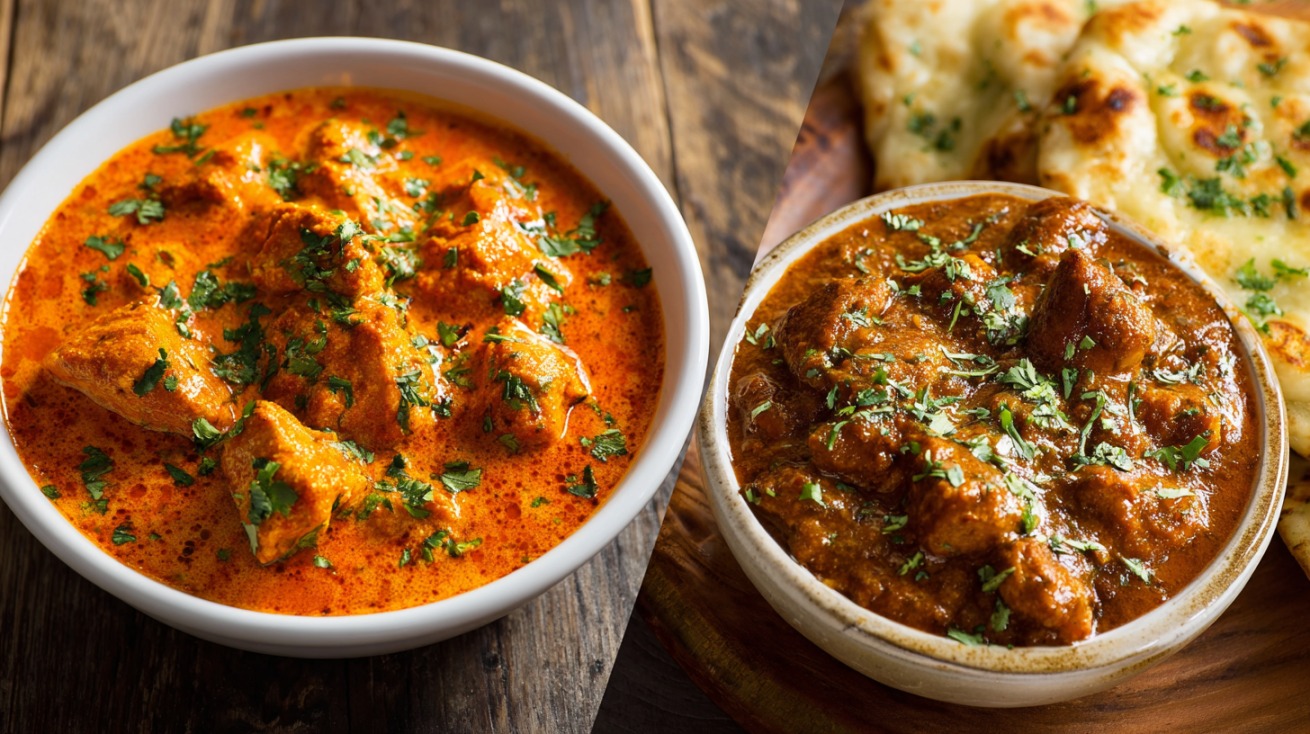
Butter Chicken, also called Murgh Makhani, originated in Delhi in the mid twentieth century.
Kundan Lal Gujral of the famous Moti Mahal restaurant created it as a practical solution for leftover tandoori chicken. Cooked pieces were simmered in a creamy tomato and butter sauce, transforming grilled meat into a new dish with broad popularity.
Over time, Butter Chicken became one of the most recognized Indian curries on restaurant menus worldwide.
Chicken Korma traces its roots to Mughlai cuisine, which developed in the Indian subcontinent during the Mughal Empire hundreds of years ago.
Word korma comes from the Urdu term qorma, meaning braise. Technique centers on slowly cooking meat in a seasoned yogurt sauce. Royal kitchens prepared early versions for emperors and nobility, focusing on refined flavors and careful preparation.
Regional adaptations introduced variations, yet gentle spices and creamy texture remained central to its identity.
Also Read: Thought about making the ranch dressing to go with the sides with your dish? Read our guide on it’s shell life!
Closing Thoughts
Butter Chicken and Chicken Korma remain creamy curry classics with distinct origins, ingredients, and flavor signatures.
One offers tomato butter tang with gentle sweetness, while the other presents nutty yogurt creaminess with aromatic depth.
Cravings and personal taste ultimately determine which curry earns a place on the table.