
It is practical food: beans for body, bacon for smoke and fat, beef for protein, and a baked sauce that thickens naturally instead of relying on starch.
When done correctly, the result is dense, glossy beans with layered flavor rather than overly sweet canned-style baked beans. Proper browning, correct bean ratio, and enough baking time are what make the difference.
Cowboy beans historically came from ranch and trail cooking, where preserved meat, beans, and basic condiments were combined in one pot.
Modern versions keep that structure but improve flavor with better barbecue sauces, smoked paprika, and balanced sweetness. The goal is savory first, smoky second, sweet last.
Ingredients (6–8 Servings)
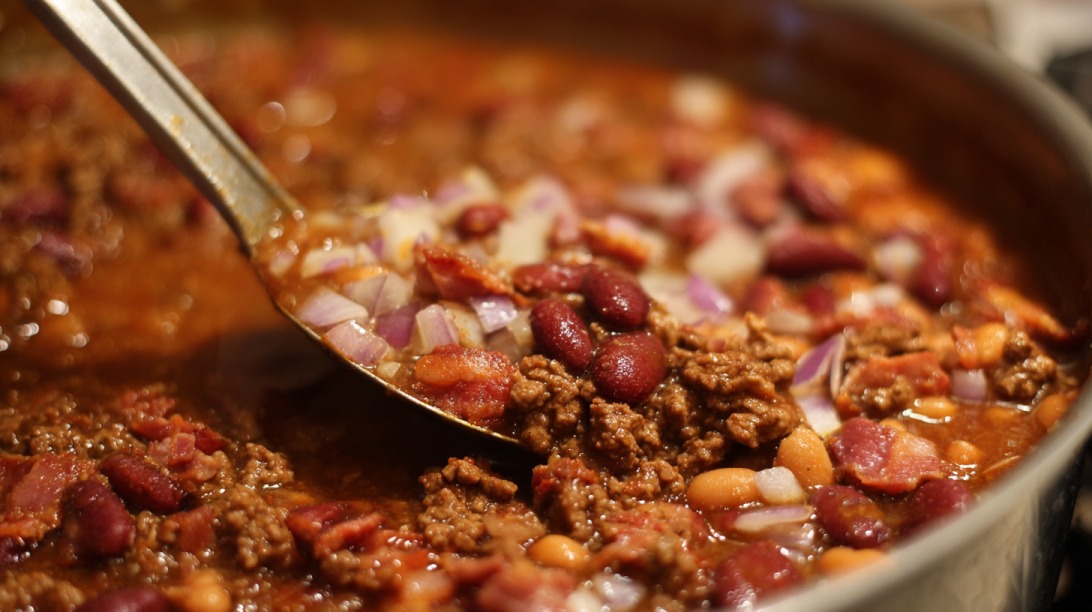
Beans Base
- 2 cans baked beans (around 800 g total, thick tomato-based style works best)
- 1 can of kidney beans, drained
- 1 can pinto beans, drained
Using multiple bean types improves texture. Baked beans provide a sauce, kidney beans keep their firmness, and pinto beans absorb flavor well.
Protein and Fat
- 300 g ground beef (15–20% fat ideal)
- 200 g smoked bacon, chopped
Bacon provides fat and smoke. Beef adds structure and savory depth. Lean beef works but requires more seasoning.
Aromatic Foundation
- 1 medium onion, finely chopped
- 2 garlic cloves, minced
These create a base flavor. Undercooking onion leaves gives a harsh taste, so cook them until soft.
Sauce Components
- 120 ml barbecue sauce (smoky, not overly sweet)
- 60 ml ketchup
- 1 tablespoon mustard
- 1 tablespoon Worcestershire sauce
- 1 tablespoon brown sugar (optional adjustment)
- 1 teaspoon smoked paprika
- Salt and black pepper to taste
This balance gives acidity, sweetness, umami, and smoke without overpowering beans.
Step-By-Step Cooking Process
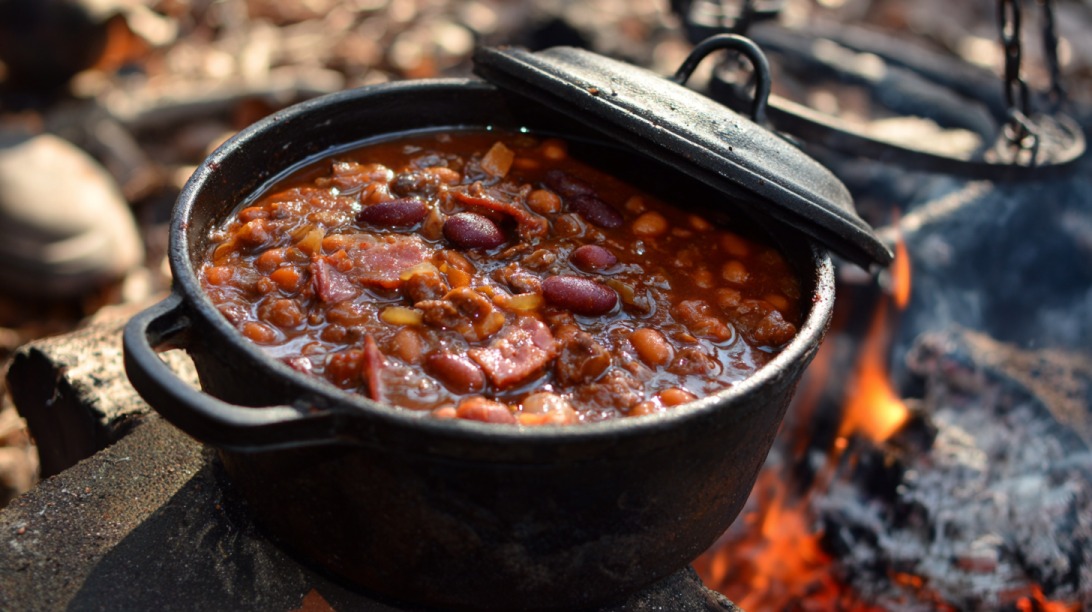
Step 1 – Render Bacon Fat
First thing I do is throw the chopped bacon into a wide skillet and let it cook slowly over medium heat. No rushing here. When bacon cooks gently, it releases more flavor and stays tender enough to survive the oven later.
I usually pull it out once it is nicely browned, but still a little flexible. If it gets too crispy now, it ends up dry after baking. And definitely keep that bacon fat in the pan. That is basically liquid smoke and flavor gold for the rest of the dish.
Step 2 – Proper Beef Browning
Ground beef goes straight into that bacon fat. I break it up, but I do not constantly stir. Letting parts of it sit for a moment helps it brown instead ofsteamingm. That browning gives the beans depth you actually taste later.
If the pan gets overly greasy, I drain a little, but I never remove it all. Some fat keeps everything rich and prevents the beans from tasting flat.
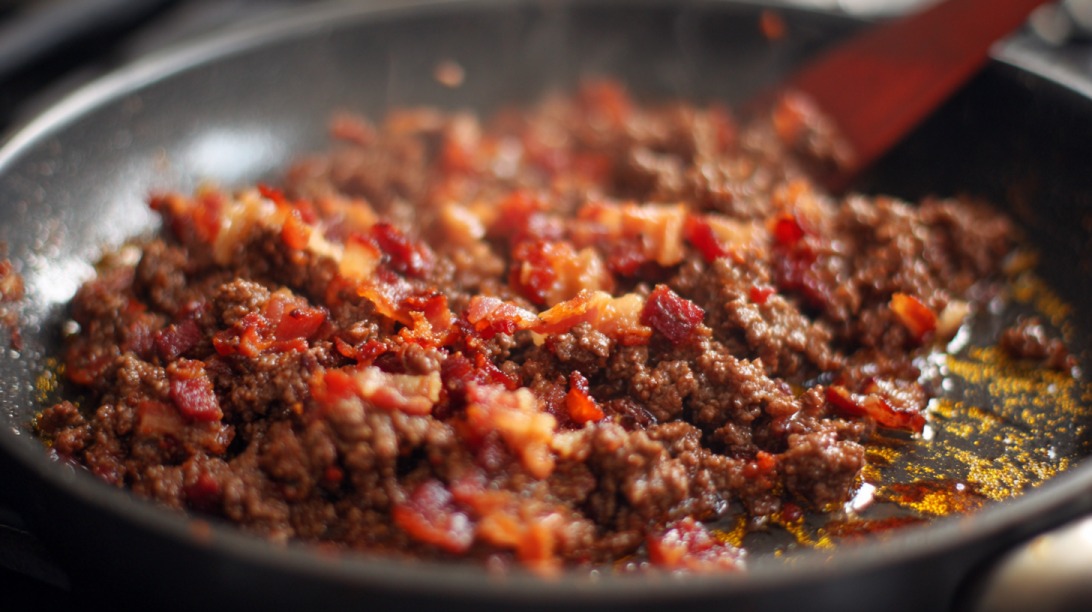
Step 3 – Aromatics Integration
Once the beef looks properly browned, chopped onion goes in. I give it a few minutes until it softens and turns slightly golden. I have rushed this step before and regretted it because an undercooked onion stays sharp in the finished dish.
Garlic comes last, just briefly, because it burns fast. A small pinch of salt here helps the onion release moisture and blend better with the meat.
Step 4 – Combining Beans and Sauce
At this point, everything moves into a big oven-safe dish or Dutch oven. Beans go in with their sauce, followed by the bacon, barbecue sauce, ketchup, mustard, Worcestershire, sugar, and smoked paprika.
I mix thoroughly, really thoroughly, because uneven mixing creates random dry pockets once it bakes. If there is a moment to taste and tweak seasoning, this is it. A little extra mustard or paprika sometimes makes a big difference.
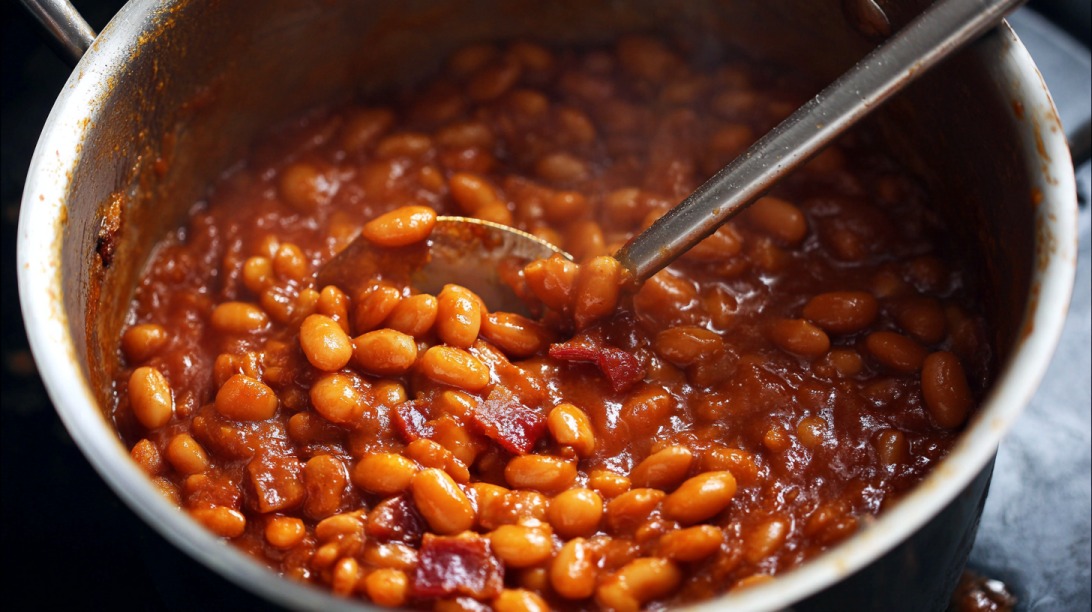
Step 5 – Baking For Flavor Development
Into the oven it goes, uncovered, around 180°C (350°F) for about 45 minutes. Halfway through, I usually stir once just to keep things even. The uncovered bake is important becausethet slow evaporation thickens the sauce naturally instead of turning it soupy.
When it is ready, the sauce clings to a spoon, the top looks slightly caramelized, and the beans still have structure. If it looks too loose, I simply leave it another 10–15 minutes. Honestly, that extra bake time usually makes it even better rather than worse.
Texture and Flavor Control Details
| Factor | Effect | Adjustment |
| Too sweet | Common with cheap BBQ sauce | Reduce sugar, add mustard or vinegar |
| Too watery | Beans release moisture | Bake longer uncovered |
| Too dry | Overbaked | Add a small amount of hot water or stock |
| Not smoky enough | Mild bacon or sauce | Add smoked paprika or liquid smoke |
Variations I Actually Use Depending on the Situation
Higher Protein Version
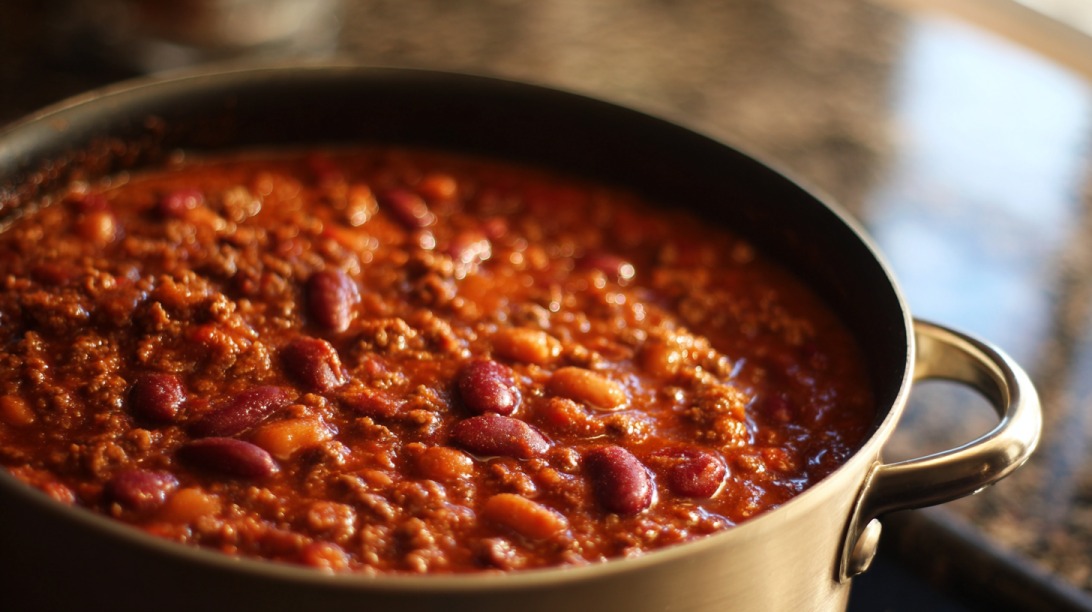
Add extra ground beef or smoked sausage. This makes the dish suitable as a main meal rather than a side.
Spicy Version
Add diced jalapeños, chipotle powder, or chili flakes. Heat balances sweetness and increases complexity.
Lower Sugar Version
Skip brown sugar completely and use a vinegar-based barbecue sauce. This keeps the flavor savory.
No-Beef Version
Sometimes I skip beef entirely and rely on bacon plus beans. Texture becomes lighter but still satisfying.
Vegetarian Version That Still Works
- Sautéed mushrooms
- Extra smoked paprika
- Dark barbecue sauce
Mushrooms replicate umami from meat fairly well.
Outdoor Cooking Option (Closer to Original Style)
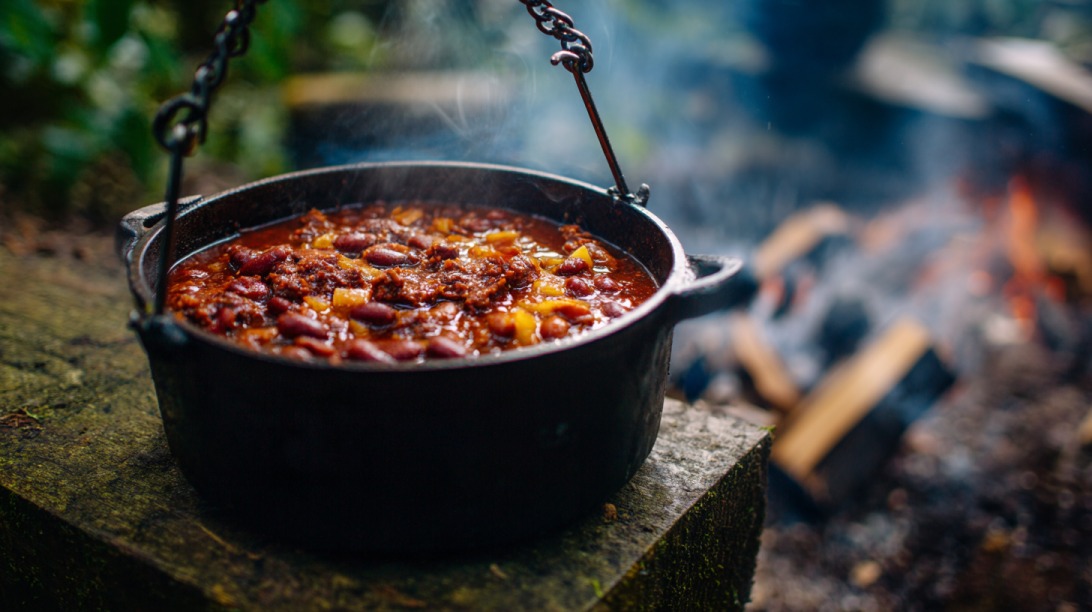
- Dutch oven over charcoal
- Covered grill, indirect heat
- Slow cooker on low 4–5 hours
Slow heat improves flavor integration and thickness.
Serving That Works Best
I usually treat cowboy beans as one of those flexible dishes that can go either direction, a solid side dish or a full meal, depending on what else is on the table. They naturally fit with grilled meats because the smoky bacon and barbecue notes echo what comes off the grill.
Cornbread is another easy match since it balances the richness and soaks up the sauce without overpowering it. When I want something lighter alongside, a simple coleslaw or fresh salad works well because the acidity cuts through the heaviness.
One thing I have noticed over time is that letting the beans sit for about 15–20 minutes after baking improves both texture and flavor.
The sauce thickens slightly as it cools and everything settles. And honestly, leftovers almost always taste better the next day. The beans absorb more sauce overnight, which makes the whole dish deeper and more cohesive.
Storage And Reheating Practicalities
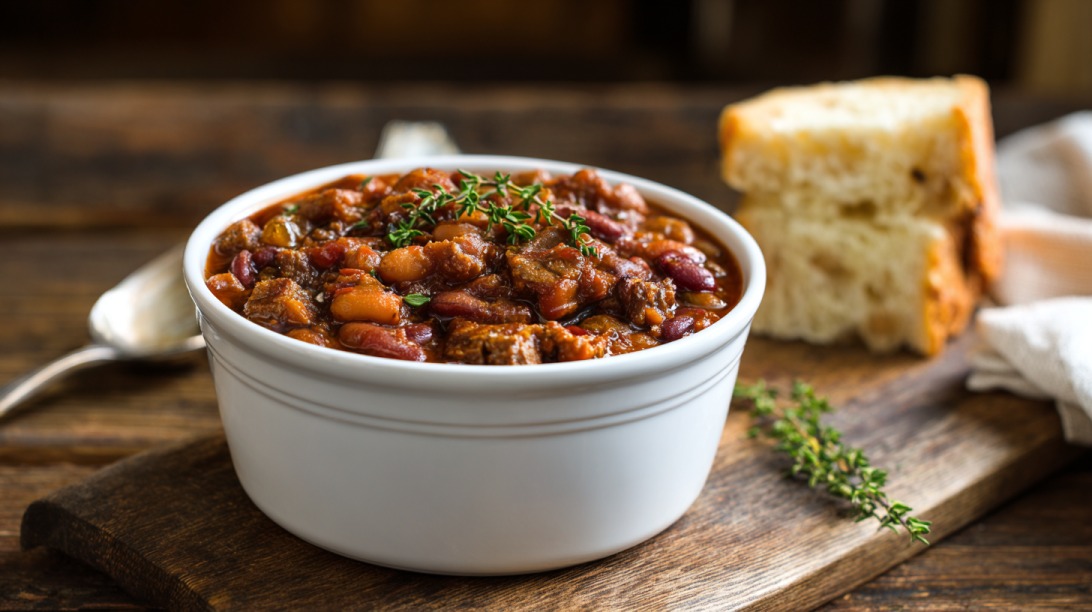
Cowboy beans store easily, which is part of why I make them in larger batches. In the refrigerator, they keep well for about four days if sealed properly. For longer storage, freezing works without much loss of quality, up to roughly three months is realistic.
When reheating, I usually add a small splash of water or broth before warming them. Beans naturally tighten up in the fridge, and that little bit of liquid brings the sauce back to the right consistency. Gentle reheating works best.
High microwave heat without stirring tends to dry the edges while the center stays cool, so stirring halfway through makes a noticeable difference.
Common Mistakes I Learned From Experience
| Mistake | What Happens | How I Avoid It Now |
| Undercooking onions | Leaves a sharp bite that carries through the whole dish | I cook onions until soft and slightly golden before adding anything else |
| Not browning the beef properly | Flavor turns flat because the meat steams instead of caramelizing | I let the beef sit briefly in the pan before stirring, so it actually browns |
| Using overly sweet baked beans or BBQ sauce | Dish becomes sugary instead of smoky and savory | I choose thicker, less sweet sauces or balance with mustard and paprika |
| Covering the dish while baking | Sauce stays thin and watery because moisture cannot evaporate | I always bake uncovered so the sauce thickens naturally |
| Adding too many bean types | Texture gets muddy, and flavors blend too much | I stick to two or three bean varieties for balance |
@marriedtobbq Loaded Baked Beans with @saucyspoon Applewood Smoked Bacon Baked Beans #SaucySpoon #saucyspoonpartner ♬ original sound – Breanna Stark
Bottom Line
Cowboy beans work when the basics are handled right: proper browning, balanced sauce, and enough oven time for the flavors to settle and the texture to tighten naturally. Bacon builds smoke, beef adds depth, and the mix of beans keeps the dish substantial without turning heavy.
It is not complicated cooking, but attention to those small steps is what separates thick, flavorful baked beans from something overly sweet or watery.
Once dialed in, this becomes one of those reliable recipes you can adjust easily, more heat, less sugar, extra protein, or even meat-free, without losing its character. It holds well, reheats well, and often tastes better the next day, which makes it practical for gatherings, meal prep, or simple comfort food without much effort.
For more tasty and easy recipies be sure to visit foodplanet.rs!